
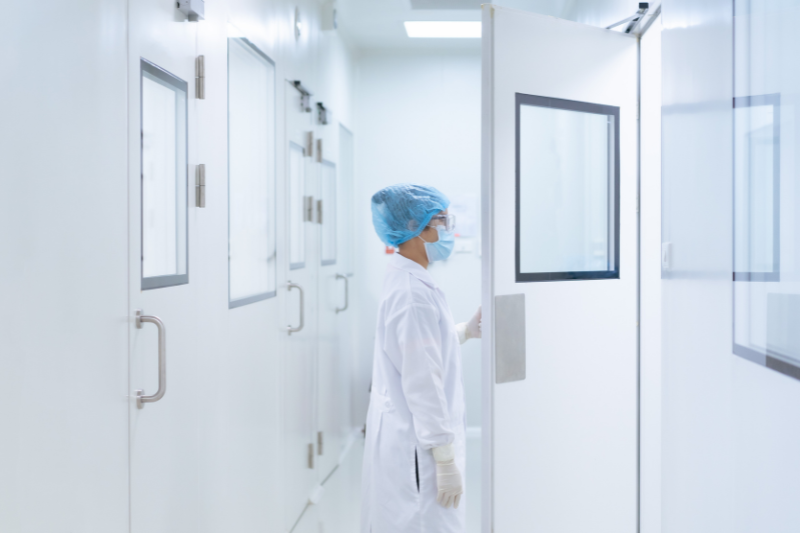
US cleanroom specialist AES Cleanroom Technology has announced it will be celebrating 40 years of advancing cleanroom technology at INTERPHEX 2026, highlighting four decades of innovation and its ongoing focus on future facility development.
The company, founded in 1986, has built its reputation on delivering integrated cleanroom solutions, emphasising speed and quality throughout the project lifecycle.
"The work has only gotten more consequential," said Chris Miller, CEO of AES Cleanroom Technology.
The therapies being developed today are unlike anything the industry has seen and the environments that enable them have to be built right and built fast.
"Our clients are tackling some of the hardest scientific challenges in human history under real cost and schedule pressure. Our job is to make sure the facility never becomes an obstacle. That's what we show up to do every day."
"Since pioneering the pre-engineered modular cleanroom system in the United States, AES has designed, manufactured and built more than 4000 facilities, representing more than 10 million square feet of controlled environment space, all made in the USA."
The company's single point of accountability spans concept, design, manufacturing, construction and ongoing service.
AES's achievements include 16 International Society for Pharmaceutical Engineering (ISPE) Facility of the Year Awards and the brand has supported clients including Genentech, CRISPR Therapeutics, Bristol-Myers Squibb and Novartis.
Its cleanrooms have enabled the development and manufacture of groundbreaking Advanced Therapy Medicinal Products (ATMPs), including the following:
- the first FDA-approved autologous cell therapy (Provenge, 2010)
- the first FDA-approved gene therapy (Luxturna, 2017)
- the first FDA-approved CAR-T cell therapy (Kymriah, 2018)
- the first FDA-approved tumour-infiltrating lymphocyte therapy (Amtagvi, 2024)
- the first FDA-approved T-cell therapy for solid tumours (Adaptimmune, 2024).
"This is not just construction," Miller added. "It is the infrastructure that supports the path from scientific breakthrough to patient access."


