

The Coalition for Epidemic Preparedness Innovations (CEPI) has announced emergency funding for three investigational vaccines targeting Bundibugyo ebolavirus, the strain that is currently driving a rapidly growing outbreak across the Democratic Republic of the Congo (DRC) and neighbouring Uganda.
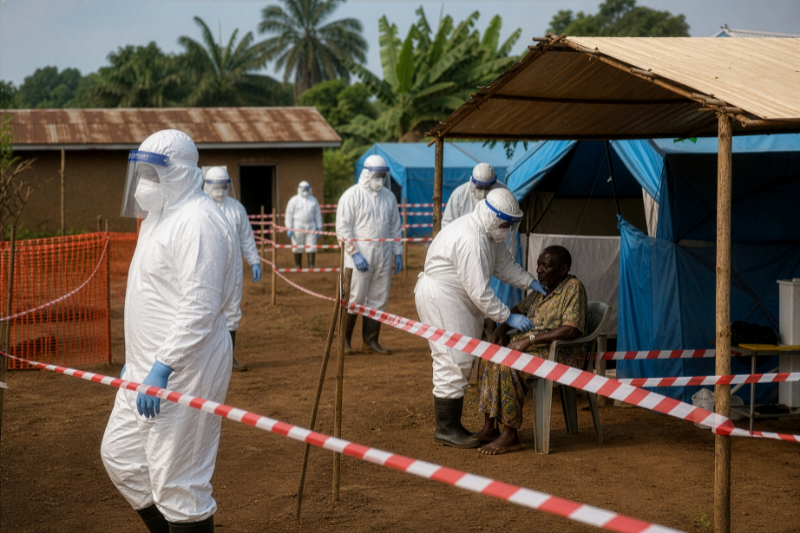 The move comes as the World Health Organization (WHO) and Africa CDC have both issued the highest-level public health emergency designations, a Public Health Emergency of International Concern (PHEIC) and a Public Health Emergency of Continental Security (PHECS), respectively.
The outbreak has now surpassed 900 suspected cases and more than 220 suspected deaths, making it the third-largest filovirus outbreak on record.
Unlike the more familiar Zaire ebolavirus strain, for which licensed vaccines exist, Bundibugyo ebolavirus currently has no approved vaccine and no candidates in clinical development.
CEPI stated that it is now moving urgently to address this gap.
CEPI's investment spans three distinct vaccine technology platforms, selected through a comprehensive global review in consultation with WHO, Africa CDC, Gavi and affected countries.
Each platform brings established safety data from prior work on related filoviruses, including Zaire Ebola, Sudan virus and Marburg virus.
IAVI is receiving up to $3.2m to generate a Master Virus Seed stock and initiate testing using the rVSV platform — the same technology used in the already-licensed, WHO-prequalified Zaire ebolavirus vaccine.
CEPI added that the platform's ability to deliver rapid protective immunity from a single dose makes it particularly suited to outbreak deployment.
Moderna is in line for the largest investment (up to $50m) covering preclinical testing and a Phase I clinical trial. CEPI said that it will simultaneously fund manufacturing of doses at scale, so Phase II/III trials can begin immediately if early data support progression.
The candidate builds on Moderna's existing mRNA research into related Ebola viruses and the same platform that was validated globally during the COVID-19 pandemic.
The University of Oxford and Serum Institute of India (SII) are receiving up to $8.6m to advance a candidate based on Oxford's ChAdOx1 adenoviral vector, the platform that supported the Oxford/AstraZeneca COVID-19 vaccine.
Funding will cover preclinical work, Master Virus Seed stock creation and manufacture of clinical-grade doses at SII under CEPI's pre-existing agreement with the institute.
CEPI CEO Dr Richard Hatchett said: "With Bundibugyo virus spreading rapidly and no licensed vaccines, every day counts in the race against this deadly disease."
CEPI’s urgent funding and support for these three promising candidates aims to advance safe, effective vaccines to help control this epidemic.
Stéphane Bancel, CEO of Moderna, added: "At Moderna, we believe our mRNA platform can play an important role in responding rapidly to emerging infectious disease threats."
We are proud to expand our strategic partnership with CEPI to advance a potential vaccine against Bundibugyo ebolavirus, leveraging our established technology and experience in related filoviruses.
CEPI has also issued an open Call for Proposals to identify additional promising candidates and expects to announce further partnerships shortly.
The global partnership issued a statement last month on the evolving Ebola outbreak, detailing the steps it was taking to counter it.
The body said it had been "working at pace with its networks" to make its resources and technical expertise "available to support appropriate clinical trials, evidence generation and other R&D priorities within nationally-led responses."
CEPI added that it had also "rapidly activated all six of our global preparedness networks so they are ready to swiftly advance vaccine development" and had established an international antibody standard, enabling developers to quickly assess Bundibugyo virus vaccine candidates against a common benchmark.


