

The CRO FairJourney Bio (FJBio) has contributed antibody discovery and engineering expertise to a novel approach for conditionally activating interleukin-12 (IL-12) in solid tumours, potentially addressing one of the key barriers to developing the potent cytokine as an oncology therapeutic.
The approach — described in a peer-reviewed study published in mAbs — uses a reversible antibody-based “switch” to keep IL-12 masked in systemic circulation and release its activity in the presence of fibronectin extra-domain B (FN-EDB), a tumour-associated extracellular matrix antigen.
IL-12 has demonstrated strong anti-tumour activity, but its clinical development has been constrained by severe systemic toxicity.
Previous approaches to improve its therapeutic window have included intratumoural administration, half-life extension and protease-cleavable prodrugs, with limited clinical success.
The Switch-IL-12 format comprises a dual-specificity Fab “switch arm” that binds competitively to either tethered IL-12 or FN-EDB, alongside a separate high-affinity FN-EDB targeting arm.
In circulation, the switch arm masks IL-12.
Once the molecule binds FN-EDB in the tumour microenvironment, avidity-driven binding favours the FN-EDB-bound state, releasing IL-12 for receptor engagement.
The mechanism creates a reversible ON/OFF, or trans-activation, logic gate.
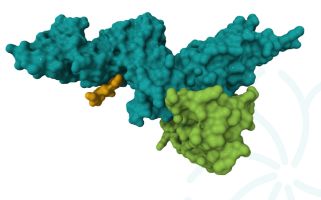 A key feature of the discovery campaign was the use of quantitative systems pharmacology (QSP) modelling to establish the binding parameters required for tumour-selective activity before engineering the final candidates.
FJBio then introduced IL-12 binding into existing FN-EDB binders and used phage display, rational library design and affinity maturation to generate dual-specificity switch binders within the model-defined affinity window.
In vitro testing showed that the lead Switch1 molecule exhibited minimal IL-12 availability in the absence of FN-EDB, while FN-EDB exposure triggered IL-12 unmasking.
In a cell-based assay, Switch1 induced interferon-gamma release from NK-92 cells only in the presence of FN-EDB.
QSP modelling subsequently predicted that Switch-IL-12 could achieve lower systemic IL-12 receptor occupancy while maintaining higher tumour exposure compared with an unmasked IL-12-Fc molecule.
The modelling therefore supports the potential for an improved therapeutic window — although, the authors note that the concept has not yet been directly evaluated in an in vivo model.
Dr Teresa Barata, Chief Scientific Officer and co-author, FairJourney Bio, said: “Harnessing the potent anti-tumour activity of IL-12 while limiting systemic toxicity has challenged researchers for almost 30 years."
"We are proud of the role our teams played in engineering this complex antibody format, developing a switch molecule that unmasks IL-12 only where it is needed."
This campaign demonstrates FJBio’s ability to partner at the most challenging end of discovery, engineering to a narrow, pre-defined specification and delivering a solution that recognises two completely unrelated targets and holds them in balance.
"We are hugely excited by the potential this has in oncology and future treatments."
The study was conducted by researchers from Third Rock Ventures, IONTAS, Certara and FJBio, with FJBio teams in Porto and Cambridge contributing to the antibody engineering campaign.


