
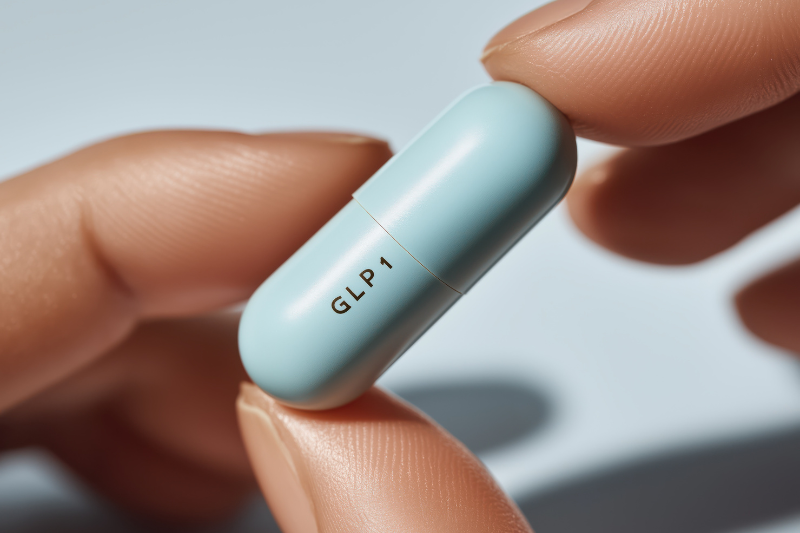
Online health and wellness company Hims & Hers has walked back plans to offer a copycat version of Novo Nordisk's Wegovy pill.
On Saturday, the company released a statement saying: "Since launching the compounded semaglutide pill on our platform, we’ve had constructive conversations with stakeholders across the industry."
"As a result, we have decided to stop offering access to this treatment."
The decision comes after the FDA said that it plans to restrict GLP-1 ingredients used in compounded drugs.
 It cited concerns around quality, safety and potential violations of federal law.
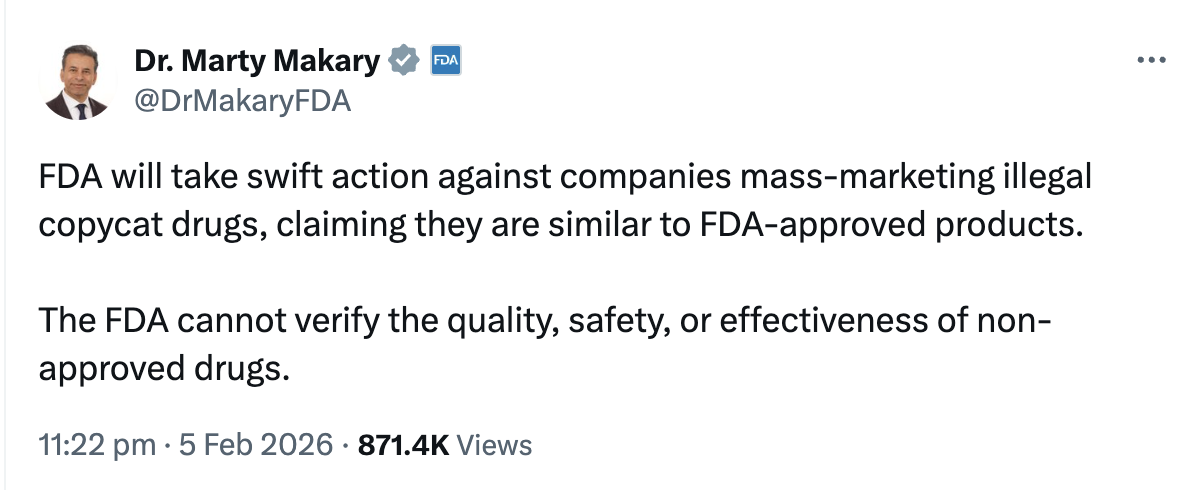
In a statement made on X, FDA commissioner Marty Makary said: "FDA will take swift action against companies mass-marketing illegal copycat drugs, claiming they are similar to FDA-approved products."
"The FDA cannot verify the quality, safety, or effectiveness of non-approved drugs."
The commissioner’s remarks served as a clear warning to the telehealth company, which had emerged as a potential threat to the established revenue streams of pharma heavyweights such as Novo Nordisk and Eli Lilly.
Shares in those companies had seen a selloff shortly after Hims' announcement.
The Department of Health and Human Services also said on Friday that it would refer Hims to the Department of Justice.
What led up to this?
In its launch announcement last Thursday, Hims said that it had "launched a compounded version of Novo Nordisk’s new Wegovy (semaglutide) pill for obesity, which starts at just $49 per month."
This makes the pill the cheapest GLP-1 therapy on the market, coming in at around $100 less than Novo's offering.
The company had also stated that its compounded Wegovy pill would use a different formulation and delivery system than Novo’s FDA-approved product.
However, Hims faced swift backlash from Novo Nordisk, which called the move an unlawful attempt to "mass-market an unapproved, inauthentic and untested knock-off semaglutide pill."
The Danish pharma giant continued: "The action by Hims & Hers is illegal mass compounding that poses a significant risk to patient safety."
"Novo Nordisk will take legal and regulatory action to protect patients, our intellectual property and the integrity of the US gold-standard drug approval framework."
"This is another example of Hims & Hers' historic behaviour of duping the American public with knock-off GLP-1 products and the FDA has previously warned them about their deceptive advertising of GLP-1 knock-offs."
Hims' compounded drug is not FDA-approved and has not undergone clinical trials to demonstrate efficacy.
Eli Lilly also weighed in on the matter, saying in a statement to Reuters: "No one should be mass-compounding or selling knock-off GLP-1 products regardless of how they’re administered."
The pair have tried to halt the burgeoning compounded GLP-1 industry in its tracks, but have had mixed success given the breadth of manufacturers that have cropped up.
Compounders offering versions of Novo Nordisk’s and Eli Lilly’s GLP-1 drugs have leaned on a "personalisation" argument to justify their activities, asserting that dose tweaks, added nutrients, or alternative delivery methods place their products within legal limits.


