
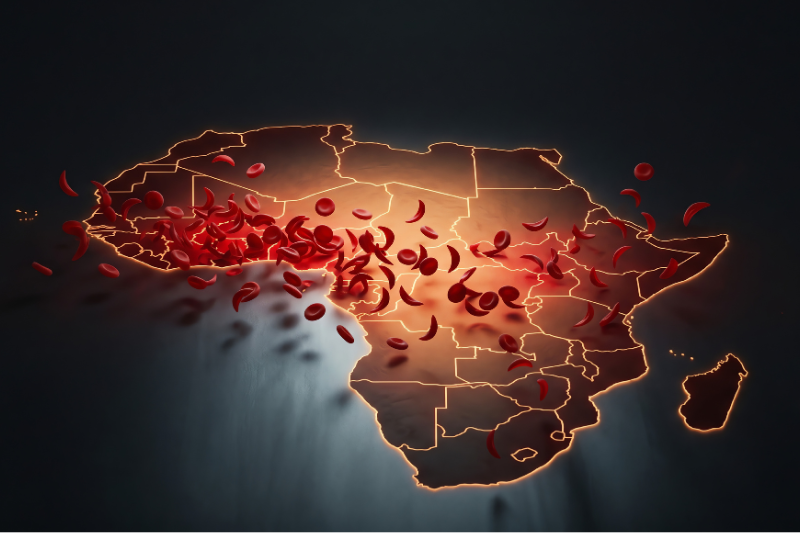
African health leaders and partners have launched a new regional initiative, the Imara Sickle Cell Framework, designed to help countries strengthen sickle cell disease care by translating policy priorities into practical, coordinated delivery within national health systems.
Sickle cell disease is a major public health challenge in Africa, accounting for nearly 80% of the global burden.
Each year, hundreds of thousands of children are born with the condition.
Despite improvements in awareness and treatment access, many patients still experience fragmented care and delayed diagnoses. The focus now is on ensuring well-coordinated care.
The Imara Sickle Cell Framework has been established to help countries connect screening, diagnosis, treatment, referral, follow-up and long-term management into a more coherent care pathway.
Instead of duplicating existing global and regional efforts, the framework has been designed to support implementation by providing governments and partners a practical model for strengthening care across the full patient journey.
"Sickle cell disease remains a significant health challenge for Kenya, particularly for children and families who depend on early diagnosis and lifelong care,” said Dr Ouma Oluga, Principal Secretary, State Department for Medical Services, Ministry of Health, Kenya.
"Through the Social Health Authority, we are strengthening access to diagnosis, treatment and safe blood."
The Imara Framework helps connect these services into a more coordinated system of care so that patients receive the support they need throughout their lives.
Initial implementation has already begun in Uganda, Kenya and Côte d’Ivoire.
The framework is being introduced as a collaborative approach that can be customised to national systems and local needs, while ensuring a common focus on enhancing continuity of care for individuals living with sickle cell disease.
"Important progress has already been made in recognising sickle cell disease as a public health priority,” added Eyong Ebai, General Manager, Africa, Terumo Blood and Cell Technologies.
The next step is ensuring these priorities translate into coordinated care that supports patients throughout their lives. Imara was designed to help countries strengthen that continuum of care.


