
Neuland Laboratories announces new $20m process development lab in Hyderabad

Published: 18-Jun-2026

The new facility will be fully operational by October 2026 and will give clients earlier manufacturability insight when looking to scale up, through the incorporation of non-GMP kilo labs as well as AI-driven route scouting, parallel synthesis and ELNs

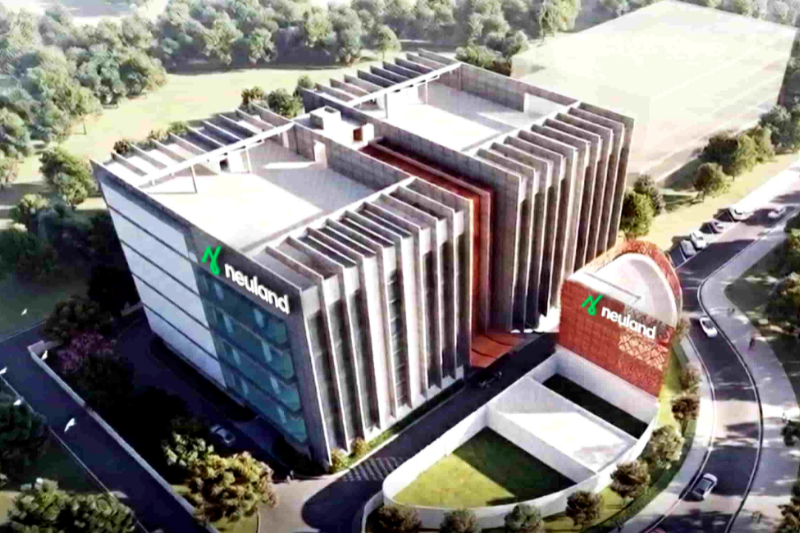
API specialist Neuland Laboratories has announced it will open a dedicated process development laboratory and integrated kilo lab at its Genome Valley campus in Hyderabad, as the CDMO looks to deepen engagement with pharma and biotech partners from early development through commercial manufacturing.

The company has committed $20m to the 135,000 sqft facility, which will undergo a specialist fit-out and be operationalised in phases, with full completion expected by October 2026.

Neuland said that, as it is using a pre-existing building rather than constructing a new shell, the entire investment is being directed toward fit-out rather than construction.

The site will be dedicated exclusively to process development and will house more than 500 of Neuland's scientists, making it one of the largest scale-up workforces in India.

A key feature of the facility is equipment designed to simulate large-scale reactions at small scale.

Speaking to Manufacturing Chemist, a Neuland Laboratories spokesperson described the centre as "more than a conventional R&D lab" but rather "an advanced process prototyping environment," in which specialised equipment allows scientists to simulate selected aspects of large-scale process behaviour within a small-scale setting.

According to Neuland, this approach generates richer development data earlier in a programme, supporting better process understanding and more informed scale-up decisions.

The company added that it has the "potential to improve cost efficiency and may reduce the need for additional experiments later in development."

Non-GMP kilo labs integrated on-site

The facility will integrate non-GMP kilo labs, allowing scientists to evaluate process performance at larger scales without transferring work to separate sites or competing for access to GMP capacity.

This is intended to let teams continue process optimisation while simultaneously generating real-time scale-up data.


In practice, the company explained, this means running multiple experiments in parallel, capturing reaction data digitally and using analytics to support faster, evidence-based scientific decisions.

This will allow teams to evaluate multiple process pathways concurrently and advance the most promising candidates into pilot-scale validation more efficiently, within the same facility.


The Kilo Lab itself will be equipped with 20-250L all-glass reactors, cryogenic capability and multiple filtration systems.

AI-driven route scouting and centralised analytics

The centre will also incorporate AI-driven route scouting, parallel synthesis and Electronic Laboratory Notebooks (ELNs), which Neuland says will support faster decision-making, reduce cycle times and enable seamless data continuity.

Neuland Laboratories announces new m process development lab in HyderabadA centralised analytical wing will house a comprehensive suite of characterisation technologies, with specialised areas for process engineering, polymorph studies, process safety and advanced flow chemistry.

The site will also include five peptide laboratories and three purification laboratories.

Automated workflows are designed to streamline routine tasks, improve reproducibility and reduce manual intervention, while predictive modelling and data-driven insights guide route selection.

By simulating scale-up processes earlier, Neuland said it expects to identify failing synthetic routes sooner and eliminate redundant tests and experiments.

Reducing handoffs between development and scale-up

The spokesperson added that the integrated model is designed to compress timelines by removing the handoffs that typically occur when process development and scale-up take place across multiple sites.

"Traditionally, process development and scale-up may take place across multiple sites, which can introduce handoffs and delays," they said.

By integrating lab development, kilo-scale validation and process engineering in one location, we can help reduce these transition points.

Combined with parallel experimentation and data-driven decision-making, Neuland told Manufacturing Chemist that this represents "a step change improvement and a much more efficient path to delivering scalable, robust processes for clients."

The company noted that while timelines remain programme-specific, the model has the potential to reduce overall development timelines.

Positioning for complex programmes

The new facility, paired with Neuland's existing expertise in novel commercial-scale API production, creates what the company calls "an incredibly attractive proposition for both pharma and biotech partners," combining the ability to run scale and chemistry needed today with early preparation for commercial production.

There are few CDMOs able to operate this way and it is one of the benefits of working with a true API specialist such as Neuland.

The company said it is already seeing positive engagement from global innovators, particularly in areas such as complex peptides, as it explains the new infrastructure's capabilities.

In several discussions, Neuland told Manufacturing Chemist, clients are recognising capabilities at the company relevant to needs they may previously have addressed through other partners.

The announcement follows Neuland's best-ever quarterly revenue, at approximately $83m.

You may also like