
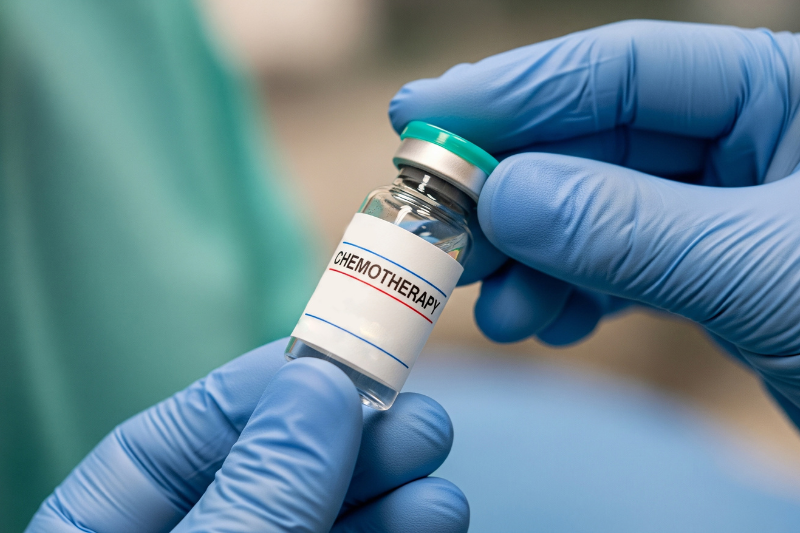
Researchers from Osaka Metropolitan University have developed a drug delivery system (DDS) that specifically transports the anticancer drug Paclitaxel (PTX) to cancerous tissue.
Led by Professor Takashi Inui, the team of scientists utilised lipocalin-type prostaglandin D synthase (L-PGDS) as a novel DDS carrier to efficiently deliver PTX.
The findings were published in ACS omega.
The drug has poor water solubility and a molecular weight of 854.
Why this matters
Recent advances in drug discovery have resulted in the development of numerous drug candidates with high therapeutic efficacy.
However, many of these compounds exhibit properties that make them challenging to handle, such as poor water solubility and high molecular weight — PTX, for example, has poor water solubility and a molecular weight of 854.
These characteristics lead to inadequate absorption in the body and difficulties in achieving the desired therapeutic effects. Additionally, these drugs can distribute to normal tissues, resulting in severe side effects.
Fortunately, active research is underway to create DDSs that can effectively solubilise these compounds and efficiently deliver them to cancerous tissues.
The researchers found, through docking simulations and solubility testing, that PTX primarily binds to the upper region of the L-PGDS β-barrel via hydrophobic interactions.
In turn, its solubility improved approximately 3600-fold compared with when suspended in phosphate-buffered saline.
Further, the team attached the targeting peptide CRGDK, which binds to neuropilin-1 receptors expressed on cancer cell surfaces, to the C-terminus of L-PGDS to create L-PGDS-CRGDK for selective delivery to cancer tissues.
In a mouse model with MDA-MB-231 breast cancer cells, a commercially available formulation showed antitumor effects during treatment, but these effects weakened after administration stopped.
In contrast, PTX/L-PGDS and PTX/L-PGDS-CRGDK maintained their antitumor effects after treatment ceased, with PTX/L-PGDS-CRGDK showing the strongest tumour suppression.
"This study demonstrated that L-PGDS can bind relatively large drugs with molecular weights up to approximately 850 and further revealed that introducing a targeting peptide enables the selective delivery of anticancer drugs to cancer cells," said Professor Inui.
The DDS developed in this study is anticipated to significantly contribute to the advancement of future cancer treatments as a novel delivery strategy for poorly soluble anticancer drugs.


