
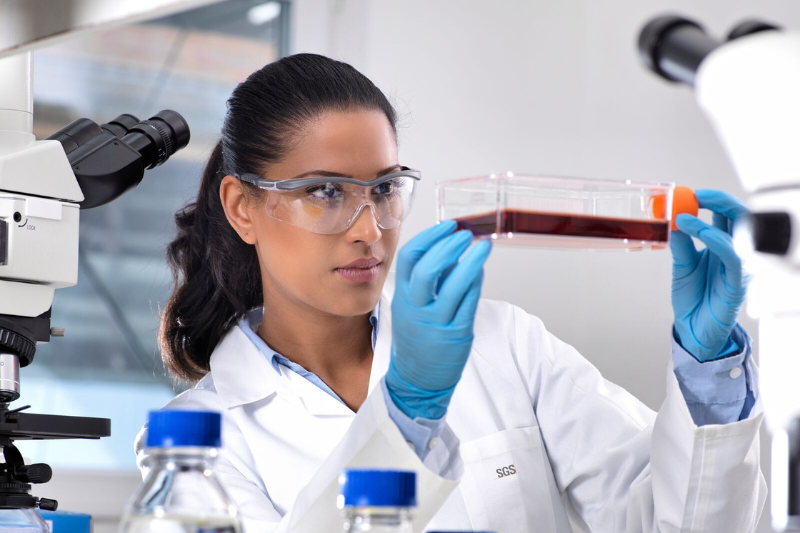
SGS has entered into a partnership with Berlin-based start-up theblood to support the development and validation of diagnostic approaches based on menstrual blood.
The collaboration is intended to establish a robust scientific and regulatory framework for this emerging diagnostic matrix, combining theblood’s research focus on female-specific biomarkers with SGS’s expertise in validation, quality assurance and regulatory compliance.
By embedding quality standards early in development, the partners aim to support credibility and long-term adoption of non-invasive diagnostic tools in women’s health.
Under the agreement, SGS will act as an independent validation partner, contributing capabilities in bioanalytical sciences and pharmaceutical testing.
The company will accompany exploratory work assessing menstrual blood as a source of clinically relevant health data, ensuring that methodologies are developed in line with scientific rigour and regulatory expectations.
Menstrual blood has gained attention as a potentially valuable biological matrix containing biomarkers linked to inflammatory and reproductive health conditions, including endometriosis, polycystic ovary syndrome (PCOS) and fertility-related disorders.
Despite its potential, applications remain under-explored and require extensive validation to demonstrate reliability, reproducibility and clinical relevance.
Representatives from SGS emphasised that innovation in diagnostics depends on establishing scientific credibility and trusted processes from the outset.
By applying validation expertise during early-stage development, the collaboration seeks to accelerate acceptance among regulators, clinicians and patients.
For theblood, the partnership supports its mission to close persistent data gaps in women’s health by exploring menstrual blood as a non-invasive diagnostic source.
The start-up aims to contribute to earlier detection, improved disease understanding and more inclusive healthcare insights through systematic biomarker research.
Industry stakeholders note that adoption of novel diagnostic matrices depends heavily on evidence demonstrating accuracy and quality-assured data generation.
Independent validation is therefore considered essential to supporting regulatory engagement and building market confidence.
The partnership reflects growing industry interest in advancing women’s health technologies and expanding diagnostic innovation beyond traditional biological samples.
By aligning research innovation with quality and compliance expertise, SGS and theblood aim to contribute to the development of credible, patient-friendly diagnostic pathways within an evolving healthcare landscape.


