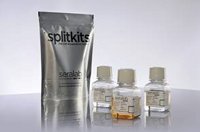
Vegetable-based system offers gentler, more efficient and contamination-free dissociation
Sera Laboratories International, a UK serum specialist, has introduced the SplitKits cell dissociation system, which is said to be the first specifically designed for use in both serum-based and serum-free methodologies.
Developed using a vegetable-based component rather than trypsin, SplitKits avoid any risk of contamination with either animal or human viruses or bacteria, and are suitable for a variety of cell culture systems.
Independent studies conducted in both research and biopharmaceutical laboratories have shown that SplitKits also encourage faster cell dissociation than trypsin. Greater control of the dissociation process produces homogeneous cell suspensions with minimal batch-to-batch variation, the company says.
According to Sera, the gentle action of the SplitKits vegetable-based enzyme gives higher cell yields and better cell growth recovery following detachment. In addition, surface epitopes and cell membranes remain unaltered and fully functional, making the kits suitable for use in flow cytometry.
‘Drawing on 30 years of experience in cell culture, we have developed SplitKits to offer a significantly improved alternative to trypsin,’ said Jenny Murray, Sera Lab’s managing director. ‘For use in both laboratory cell culture and biopharmaceutical manufacturing, the increasing regulation of the use of animal-based components in the biopharmaceutical manufacturing environment means that SplitKits also offer the industry a potentially safer, more compliant system for cell culture.’
Each SplitKit comprises a vegetable-based enzymatic reagent (SplitCells), AntiSplitCells and a SplitCells buffer. There are three formats in the SplitKits range, each being optimised for use with specific cell types: SplitKit Strong, for strongly adherent and bioreactor-cultured cells; SplitKit Moderate for moderately adherent cells; and SplitKit Mild for mildly adherent cells.