

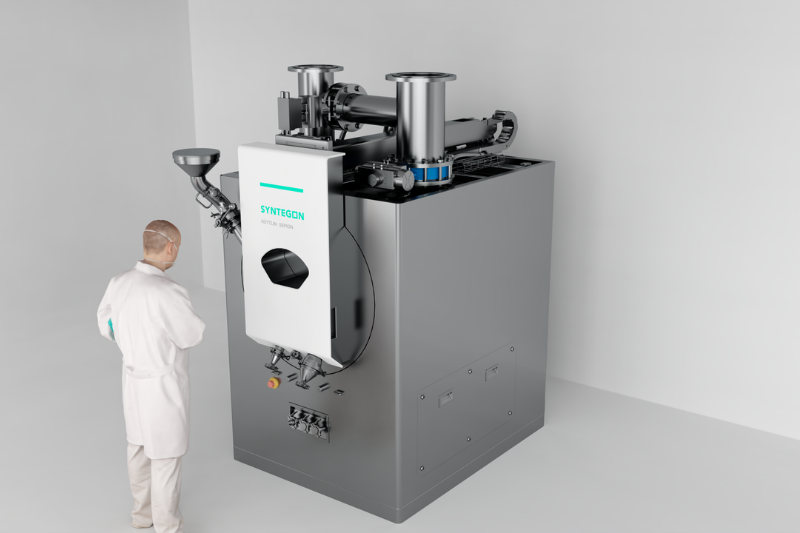
Syntegon has launched the Sepion 75, a new pilot-scale tablet coater designed to simplify OSD development and scale-up while providing greater flexibility for smaller batches and containment of highly potent active pharmaceutical ingredients (HPAPIs).
The launch expands the firm's Oral Solid Dosage (OSD) processing portfolio, which already includes high-shear mixers, modular fluid-bed systems, the Xelum platform, the TPR Series and high-output presses.
It also completes the company's already-established Sepion range, which covers 175-1000 L machines.
CDMOs and manufacturers are producing more diverse products with smaller, more variable batch sizes, shifting facilities away from rigid, single-product assembly lines toward more agile, modular systems that can quickly reconfigure between different drug formats or medical device specifications.
HPAPIs are being used increasingly in drug pipelines, particularly in targeted therapies such as ADCs and oncology treatments.
Their high potency, alongside the production of small, high-value batches, is driving demand for manufacturing solutions with stringent containment capabilities.
Speaking to Manufacturing Chemist, Fritz-Martin Scholz, Global Product Manager at Syntegon, said: “Containment is required based on two reasons: development of new drugs with highly potent APIs or unknown OEB requirements and production of small high-contained and high-value batches, e.g. for oncology therapies.”
Syntegon is positioning its new Sepion 75 as a solution to these increased requirements, using the same process principles as the larger Sepion coaters already available.
This will allow direct transfer of process parameters from pilot to commercial scale, without redefining parameters — which should mean more straightforward scale-up and potentially more reproducible coating results.
Batch-size flexibility
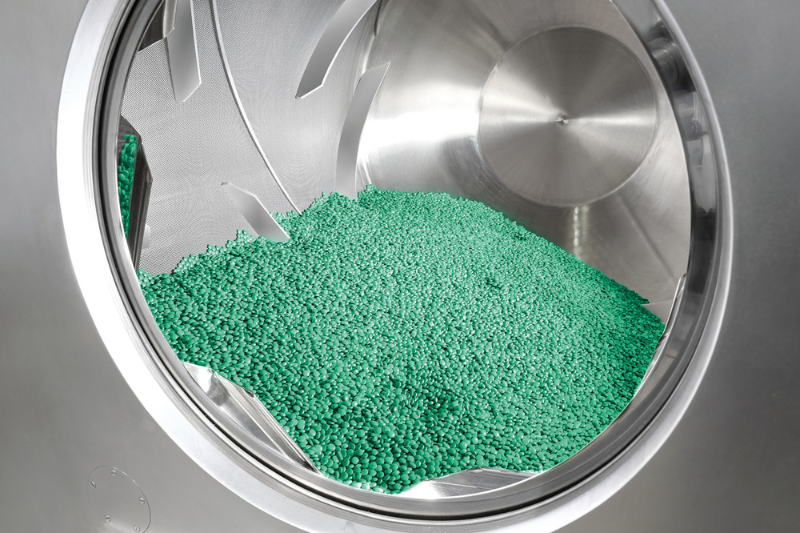 The tablet coater has flexible batch processing across a wide operating range, covering batch sizes from 10 to 100 per cent of the maximum working volume.
The machine also has two interchangeable drum sizes within a single machine, covering batch volumes from 8 to 75 litres.
The firm said this would support both early development batches and advanced pilot runs without redefining process parameters, enabling flexible production planning and reducing downtime during product changeovers.
Scholz added: "One important aspect for the seamless scale-up is the geometric similarity of drum and baffles, which leads to an equivalent movement of the tablet bed. The same applies to the flow of process air."
This eliminates unknown variables in traditional scale-up and dramatically simplifies the process.
Designed for functional tablet coatings
The Sepion 75 will also have an "optimised drum geometry" and an advanced spraying system that Syntegon says will improve process air usage, allowing shorter processing times.
An automatically adjustable spray arm will maintain the optimal spray position for different filling levels and contribute to reproducible coating conditions across varying batch sizes, which the company said would make the Sepion 75 suitable for "demanding applications" including functional coatings.
Containment for HPAPIs
To support HPAPI use, the Sepion 75 supports containment-oriented production, minimising manual intervention.
Containment up to OEB5 is actually an option for all Sepion coaters through split valves, safe-change filters and extended cleaning configurations.
This improves operator safety and reduces contamination risks while supporting compliance with current pharma manufacturing requirements.
"By extending the Sepion series to the pilot scale, we support pharmaceutical manufacturers in simplifying development and scale-up while maintaining consistent process principles across production stages," said Scholz.


