
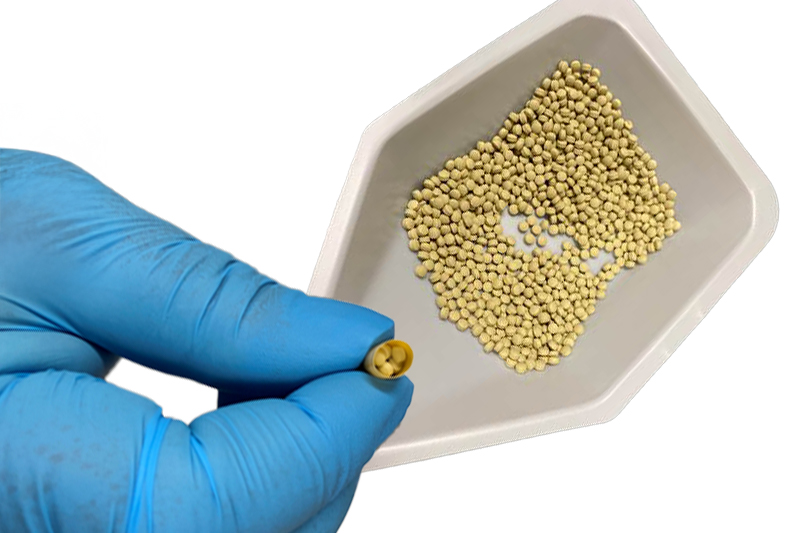
Offering formulation flexibility, manufacturing efficiency and lifecycle management advantages, tablet-in-capsule (TiC) technology has emerged during the last 10 years as a strategically important platform in oral solid dose (OSD) development and drug delivery.
By placing one or more compressed tablets inside a hard capsule shell (gelatin or HPMC), drug developers can decouple formulation strategies, customise release profiles and address active pharmaceutical ingredient (API) incompatibilities without resorting to more complex multilayer compression technologies.
For a pharmaceutical industry facing increasingly potent molecules, fixed-dose combinations (FDCs) and patient-centric design pressures, TiC provides a pragmatic and scalable solution.
Thomas B. (Brad) Gold (pictured), Head of Global Formulations R&D at Piramal Pharma Solutions, explains.
Addressing API incompatibility and stability
One of the principal drivers for TiC adoption is the ability to physically separate APIs that may be chemically incompatible or prone to interaction in a single blend.

Traditional bilayer or multilayer tablets can mitigate this to some extent, but compression-induced contact and moisture migration can unfortunately break through that barrier.
In a TiC configuration, APIs can be formulated into discrete tablet cores with tailored excipient systems, compression forces and coatings.
The capsule shell acts as an additional barrier, reducing the risk of cross-interaction(s). This is particularly relevant for moisture-sensitive small molecules, acid-labile compounds or combinations involving differing microenvironmental pH requirements.
For high-potency APIs (HPAPIs), the approach can also support containment strategies by enabling closed tablet manufacture followed by automated encapsulation.
Enabling dual and modified release profiles
TiC systems are especially attractive when differentiated release kinetics are required.
An immediate-release (IR) tablet can be combined with a modified-release (MR) core within the same capsule to achieve biphasic or pulsatile delivery profiles without complex matrix engineering.
This approach offers several advantages compared with monolithic extended-release designs:
- greater control of individual release mechanisms
- simplified formulation optimisation for each phase
- reduced risk of dose dumping
- flexibility when adjusting release characteristics late in development.
By applying functional coatings to one or more internal tablets, developers can fine-tune lag times, enteric protection or sustained-release behaviour while maintaining a straightforward encapsulation process.
Fixed-dose combinations and lifecycle management
As combination therapies expand across therapeutic areas such as oncology, cardiovascular disease and CNS disorders, TiC offers a relatively low-risk pathway to FDC development.
Separate tablets can be optimised independently and later assembled into a single dosage unit, thereby streamlining development timelines.
From a commercial perspective, TiC also provides a lifecycle management tool. Innovator companies can differentiate products — by combining strengths, modifying release profiles or integrating adjunct therapies — without reformulating established tablet cores.
For generics manufacturers, the platform can simplify replication of complex combination products while maintaining manufacturability.
Manufacturing considerations
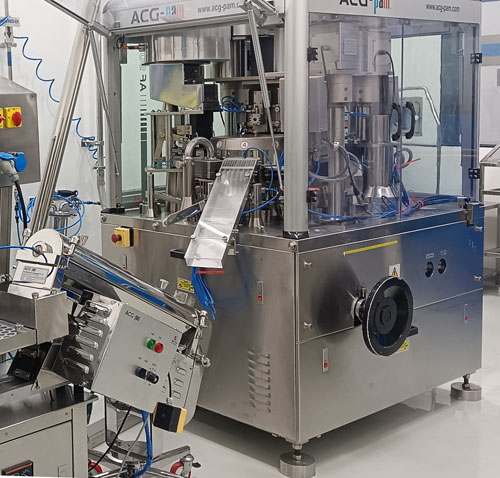
Operationally, TiC leverages established OSD infrastructure. Standard tablet compression equipment is used to produce the internal cores, followed by capsule filling on conventional encapsulation lines that are adapted to accommodate solid inserts and specific counting mechanisms.
The latter ensures that the correct type and respective quantity of tablets are dosed into the capsule.
Compared with bilayer tableting, TiC reduces the risks associated with layer delamination, cross-contamination between feed frames and compression force optimisation across multiple layers.
Changeover times may also be reduced as each tablet component can be manufactured separately.
However, precise weight control and positional accuracy within the capsule are critical. Automated vision systems and in-process controls are typically deployed to ensure correct insertion and orientation, particularly when multiple minitablets are used.
Capsule size selection must account for tablet dimensions, coatings and overall fill weight, balancing swallowability with mechanical robustness.
HPMC shells may offer advantages for moisture-sensitive products, API with crosslinking proclivity or vegetarian positioning.
Regulatory and quality perspectives
From a regulatory standpoint, TiC products are generally assessed within established OSD frameworks.
Nonetheless, developers must demonstrate uniformity of dosage units, mechanical integrity during transport and consistent release performance across all internal components.
Dissolution method development, as is the case with an FDC, for example, in a multilayer tablet, can be more complex, particularly when multiple release phases are involved.
Discriminatory testing capable of monitoring individual tablet contributions may be required. Stability studies must also consider potential capsule–tablet interactions, moisture ingress and coating performance during the product’s shelf-life.
Future outlook
As pipelines evolve toward more potent, complex and increasingly personalised therapies, formulation platforms that offer modularity and adaptability will become more valuable.
Tablet-in-capsule technology aligns well with these trends, providing a bridge between traditional solid-dose manufacture and next-generation combination design.
For CDMOs and pharmaceutical manufacturers alike, TiC is more than a niche format; it’s a versatile and commercially attractive addition to the oral delivery toolbox that combines technical sophistication with operational pragmatism.