
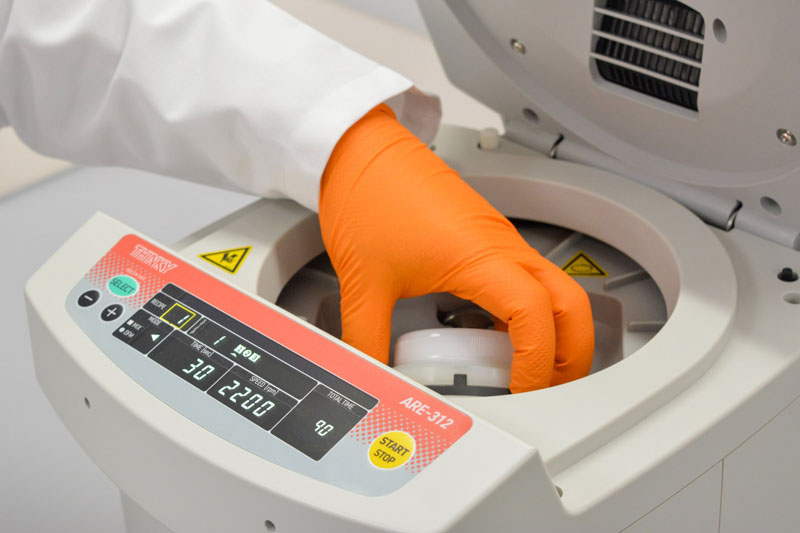
More than 3000 peer-reviewed papers indexed on Google Scholar now reference THINKY Mixers.
The milestone represents thousands of independent researchers choosing the same planetary centrifugal mixing technology to solve difficult materials problems.
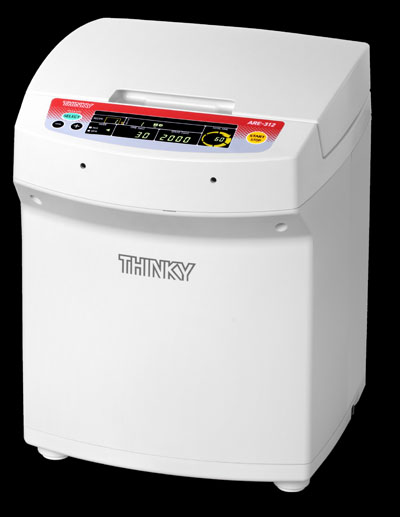
Twenty years after Intertronics introduced THINKY Mixers to the UK and Ireland, the technology continues to support manufacturing innovation and repeatable, air-free sample preparation.
How the technology works
THINKY Mixers use non-contact planetary centrifugal mixing, rotating sample containers on their own axis at a 45-degree angle while revolving them around a central point.
At several thousand RPM, the process generates forces of about 400 G, producing a homogeneous mix in seconds to minutes without introducing air.
Some models include a vacuum pump, enabling simultaneous mixing and degassing when an air-free result is essential.
Research evidence in practice
The milestone is reflected in research where repeatable, air-free sample preparation directly affects outcomes.
At the University of Sheffield, researchers developing a diagnostic glove to monitor musculoskeletal conditions used the THINKY Mixer to mix nanoparticles into a viscous polydimethylsiloxane (PDMS) mixture and produce a graphite composite.
The process removed the need for solvent mixing aids, reduced steps, improved health and safety ... and increased repeatability.
“The THINKY Mixer is a huge improvement on our previous process and means we can achieve consistent outcomes more quickly,” said Tom Paterson, Postdoctoral Research Associate at The University of Sheffield.
“The mix quality is extremely good, the mixer doesn’t introduce air into the mix, and we’re making a substantial time saving.”
Why the milestone matters
Darren Rea, Lead Sales Specialist at Intertronics, added: “Passing 3000 paper citations for the THINKY Mixer is a meaningful milestone because it is an independent measure of trust in the technology."
"Researchers rarely mention equipment unless it matters to the experiment. Three thousand citations suggest this is not simply another laboratory instrument, but part of the methodology for preparing difficult materials, from battery slurries and conductive inks to pharmaceutical formulations and advanced composites.”
Twenty years on, the technology still supports emerging research without requiring laboratories to switch mixing platforms as priorities evolve.
For manufacturers moving from research into production, this depth of published experience can reduce technical risk because thousands of researchers have already explored its capabilities and limitations.
Read the full case study
To learn how researchers at the Universities of Sheffield and Birmingham are using THINKY Mixers to improve repeatability, reduce preparation time, and overcome sample preparation challenges, read the full case study on Intertronics' website.


