

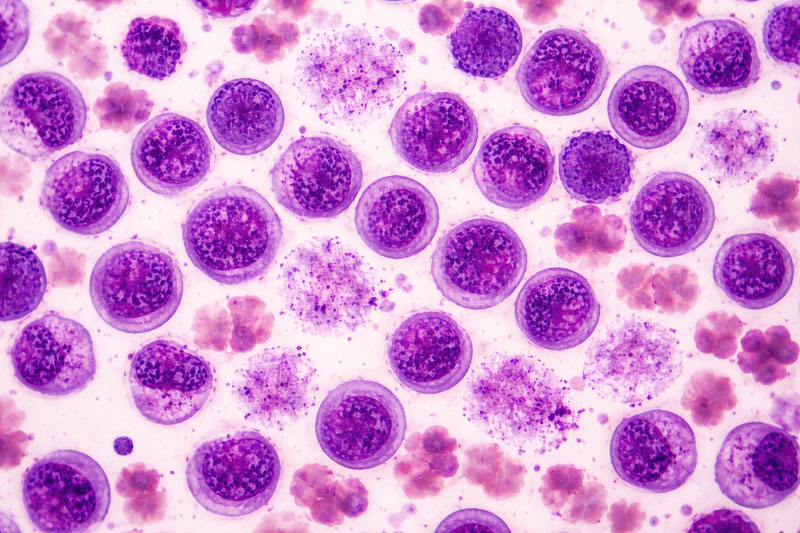
New research shows that chronic lymphocytic leukaemia (CLL) cells can switch between survival signals, helping to explain why treatments work for some patients but fail for others.
The findings could support more personalised care.
Professor Simon Mitchell of the University of Sussex, supported by Leukaemia UK’s John Goldman Fellowship Follow-up Fund, developed computer models predicting how patients’ CLL cells respond to survival signals.
Led by collaborators Professor A. Pepper, Professor C. Pepper and Dr Kennedy and published in Blood, the study could clarify why treatment responses differ and resistance develops.
It is the first detailed computer model of B-cell receptor (BCR) signalling in CLL to be tested and supported with patient cells.
CLL, the most common adult leukaemia, remains incurable. Bruton’s tyrosine kinase inhibitors (BTKi) have improved outcomes, but responses vary.

BTKi disrupt the B-cell receptor (BCR) pathway, forcing CLL cells from protective sites such as lymph nodes into the bloodstream, where treatment can target them more effectively.
Some patients still develop resistance. In 20–30% of relapses, no mutation explains why.
Using Professor Mitchell’s model, researchers found that when inhibitors block BCR signalling, some CLL cells switch to a second survival pathway, Toll-like receptor 9 (TLR9).
This may explain why resistance develops in some patients while others respond exceptionally well.
The findings could help clinicians to identify effective drugs or combinations earlier, avoid ineffective treatment and reduce side-effects, toxicity and hospital time.
Professor Simon Mitchell said: “BCR-targeting therapies have transformed CLL treatment, but we still do not fully understand why they eventually fail for some patients.
“Our research suggests CLL cells can switch the signals they use to survive. Understanding these differences may help predict treatment response.”
Professor Andrew Pepper said: “Combining laboratory experiments with mathematical models revealed insights neither approach could achieve alone."
"Our findings identify which patients may need an additional drug alongside BTK inhibitors and point towards new targeted therapies.”


