
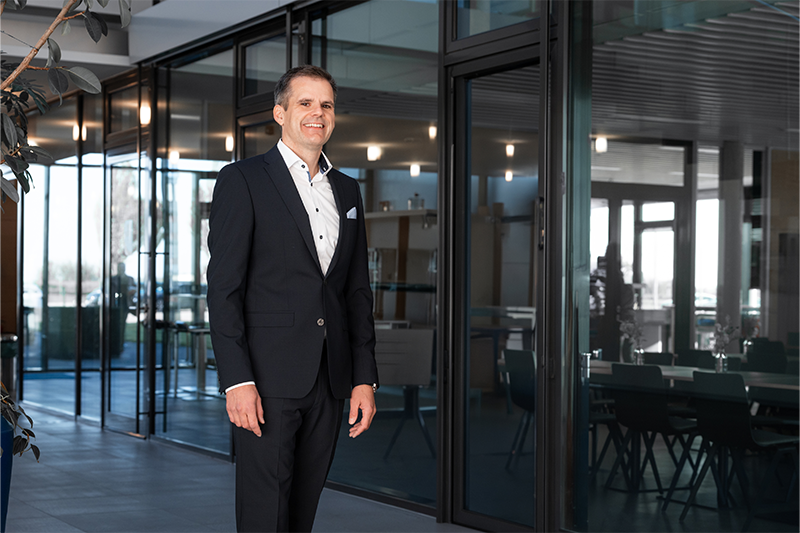
Optima Pharma has appointed Christian Reichardt to the position of Chief Technology Officer (CTO), effective April 1, 2026. Reichardt brings more than 17 years of international experience in the development of highly automated production facilities, most recently at Syntegon, where he was responsible for development and product line organisations in the pharmaceutical sector, managed complex international projects, and further developed engineering organisations using agile methods. At Optima Pharma, he is responsible for strategic technology development, thereby strengthening the company’s role as a technology partner for the entire lifecycle of sterile production facilities.
This combination will further strengthen our innovative capabilities and enable us to support our customers worldwide even more effectively
“With Christian Reichardt, we are gaining a technology expert who combines deep engineering expertise with extensive experience in building modern, high-performing organisations. This combination will further strengthen our innovative capabilities and enable us to support our customers worldwide even more effectively,” says Johannes-Thomas Grobe, CEO of the Optima Pharma Division.
Pharmaceutical manufacturers worldwide are investing in additional sterile filling capacity. This investment is driven by growth areas such as biologics, GLP-1 products, and other sterile pharmaceuticals, as well as the increasing demand for isolator and high-potency technologies. At the same time, regulatory requirements such as EU GMP Annex 1 are tightening standards for user-friendliness and data integrity. “Our task is to meet these requirements with scalable, validatable, and operationally reliable plant solutions,” says Reichardt.
For him, standardisation and modularisation are the key levers for shortening development and project timelines and efficiently implementing validatable, investment-secure solutions for the entire plant lifecycle. The next generation of machines is designed to provide more targeted support for sterile filling processes, with 100 percent in-process control, minimal manual intervention, and AI-supported assistance functions.
“Technological leadership means translating requirements for sterility assurance, digital connectivity, and lifecycle support into robust and qualifiable plant concepts at an early stage—and incorporating OT/IT security from the very beginning,” Reichardt concludes.


