In pharmaceutical and chemical manufacturing, vacuum technology plays a critical role in processes such as drying, solvent recovery, filtration and distillation. Yet many facilities continue to rely on oil-lubricated vacuum pumps that were installed years ago.
These pumps work, and that is not in question. They have proven their effectiveness and have become part of everyday operations.
What manufacturers need to consider is whether these established pumps remain the best fit for today’s operational, environmental and productivity goals.
Looking beyond the purchase price
When evaluating vacuum systems, many plants focus primarily on the initial investment. However, the true cost of ownership extends far beyond the equipment itself.
Oil-lubricated vacuum pumps typically require:
- Regular oil refills, especially for vacuum pumps with one-though oil process
- Filter replacements
- Waste oil disposal
- Routine maintenance interventions
- Monitoring of oil contamination risks
Individually, these costs may seem manageable. Together, they can significantly affect operating efficiency and overall lifetime costs.
Why more manufacturers are considering dry vacuum technology?
Dry vacuum pumps eliminate the need to purchase large volumes of oil and remove this fluide from the compression chamber, creating a cleaner vacuum environment while helping reduce oil disposal and contamination risks. Manufacturers evaluating dry technology are often looking to reduce operating costs and improve process stability.
A pharmaceutical example
A pharmaceutical manufacturer in Italy recently faced rising operating costs and increasing maintenance demands in a solvent drying application. Rather than simply replacing the existing oil-lubricated pump with a similar unit, Edwards conducted a complete vacuum system assessment, reviewing process conditions, vapour loads, conductance, leakage rates and pipework configuration.
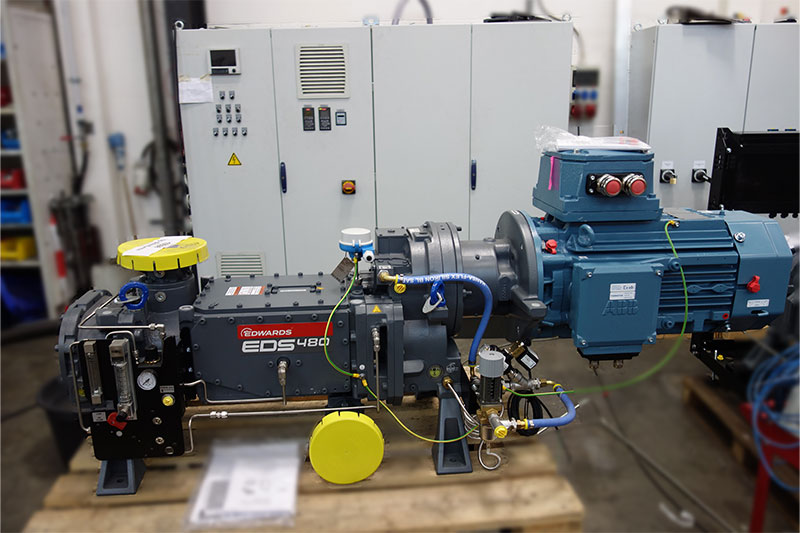
Following the assessment, an Edwards EDS480 dry screw vacuum pump was recommended. The project demonstrated that the dry vacuum solution maintains required process performance while helping reduce operating costs.
Every application is different
There is no universal answer when considering a transition to dry vacuum technology. Process requirements, solvents, operating conditions and production objectives vary widely across pharmaceutical and chemical operations.
That is why a system assessment is often the best starting point. A detailed review can identify opportunities to improve reliability, reduce risk and optimize operating costs before any investment decision is made.
Ask for your free assessment
Could your vacuum system be costing more than you think?
Edwards Vacuum specialists offer to evaluate your current installation and identify opportunities to improve process reliability and optimise operating costs.
To know more, click here: https://hubs.ly/Q04BMyJK0
Or
Click here to get your FREE Vacuum System Assessment https://share.hsforms.com/12-gLG_VeT8-rNSgWUtoA6w4baq6