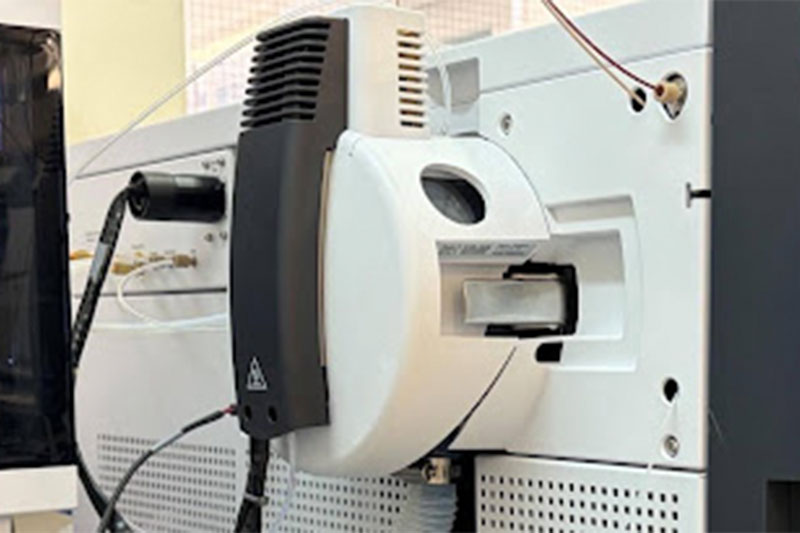
Interest in nitrosamine testing increased sharply following the discovery of nitrosamine impurities in pharmaceutical products, including Sartan medicines, in 2018. Early analytical procedures had relied mainly on chemical reactions and spectrophotometric methods, which could indicate the presence of nitroso compounds but lacked the required specificity and sensitivity for targeted quantitation. However, analysis has evolved from these relatively simple chemical detection methods into highly sensitive, selective techniques capable of measuring trace concentrations of specific targets in complex sample matrices.
Why nitrosamine analysis matters
Nitrosamines can form during pharmaceutical manufacturing when secondary or tertiary amines come into contact with nitrosating agents, particularly nitrite, under suitable chemical conditions. Formation is not limited to the main manufacturing reaction. Potential sources include contaminated raw materials, recovered solvents, degradation pathways, packaging materials and, in some cases, storage conditions.
The consequences of nitrosamine contamination have been substantial. Several product recalls and manufacturing investigations have highlighted weaknesses in conventional impurity control strategies and demonstrated the need for much more sensitive analytical procedures.
Regulatory agencies such as the U.S. Food and Drug Administration (FDA) and the European Medicines Agency (EMA) now expect manufacturers to undertake detailed nitrosamine risk assessments during both development and commercial manufacture. Performing a nitrosamine risk assessment involves understanding the process chemistry, identifying potential sources of nitrosamine formation, and demonstrating that analytical methods can detect relevant impurities at or below acceptable intake limits.
The emergence of nitrosamine drug substance-related impurities (NDSRIs) further complicates the situation. Unlike relatively simple compounds such as NDMA and NDEA, NDSRIs are structurally related to the active pharmaceutical ingredient (API). Their chemistry and toxicological profiles can therefore vary considerably. In many cases, the analytical challenge is compounded by the absence of suitable reference standards when an impurity is first identified.
Analytical challenges
Several factors make nitrosamine analysis particularly demanding.
The first is the very low concentrations involved. Depending on the compound and the applicable regulatory limit, methods may need to quantify analytes at low parts-per-billion (ppb) concentrations and, in some circumstances, even lower, placing considerable demands on instrument sensitivity and overall method performance.
Matrix complexity is another issue. Pharmaceutical products can contain APIs, excipients, degradation products and other process-related impurities, any of which may interfere with chromatographic separation or affect mass-spectrometric response. Matrix effects can be particularly important when working close to the analytical limit.
There is also the question of scope. Depending on the API's chemistry, the manufacturing process could form numerous nitrosaminesAnalytical strategies have consequently moved beyond testing for only a small number of well-characterised compounds and towards broader screening approaches.
Sample preparation introduces another potential source of error. Nitrosamines can potentially form or be lost during sample preparation if conditions are not properly controlled. Solvent quality, extraction conditions, temperature, reaction time and sample handling all need to be considered when developing a method.
Evolution of analytical techniques
Early approaches to nitrosamine testing were generally product-specific and focused on known compounds. Laboratories commonly developed targeted LC-MS/MS or GC-MS methods for compounds such as NDMA and NDEA.
Laboratories continue to rely on these methods, especially when they clearly understand the expected impurities. However, these methods lose flexibility when new nitrosamines are identified or when the manufacturing process yields less familiar compounds.
The emphasis has consequently shifted towards analytical procedures that provide greater coverage and, where possible, the ability to investigate unexpected components.
Liquid chromatography-tandem mass spectrometry (LC-MS/MS)
LC-MS/MS has become one of the main techniques used for pharmaceutical nitrosamine analysis. Triple-quadrupole instruments operated in multiple reaction monitoring (MRM) mode offer a useful combination of sensitivity, selectivity and quantitative precision.
Depending on the analyte and matrix, modern methods can achieve limits of quantification below 10 ng/g. The use of isotopically labelled internal standards has also become common and can significantly improve quantitative reliability by compensating for variations in extraction efficiency and matrix effects.
Targeted LC-MS/MS remains particularly valuable for routine release or confirmatory testing when the identity of the relevant nitrosamines is already known.
High-resolution mass spectrometry
High-resolution mass spectrometry (HRMS) has become increasingly important as laboratories have moved towards broader nitrosamine screening.
Instruments based on Orbitrap or quadrupole time-of-flight (QTOF) technology provide accurate mass measurements, often with mass errors of only a few parts per million. This additional mass accuracy can help distinguish potential nitrosamine signals from interfering compounds and can provide useful information when investigating previously unidentified impurities.
LC-HRMS can also support the analysis of several compounds within a single procedure. Some regulatory and research methods have demonstrated quantification at concentrations around 0.005 µg/g, although achievable performance depends on the analyte, matrix and instrument configuration.
One of the practical advantages of HRMS is the ability to revisit full-scan data. If a new nitrosamine becomes a regulatory concern at a later date, previously acquired datasets may be reprocessed to look for evidence of that compound, a major advantage during investigations and method development.
Gas chromatography-mass spectrometry
GC-MS continues to have an important role, particularly for volatile nitrosamines such as NDMA, NDEA and NMBA. GC-MS/MS systems using electron ionisation and triple-quadrupole detection can provide high sensitivity and good selectivity.
Headspace sampling can also simplify sample preparation and reduce the potential for contamination during the analytical process. However, the technique is less suitable for larger, thermally unstable or highly polar nitrosamines. For these compounds, LC-MS/MS and LC-HRMS are generally more appropriate.
Advances in sample preparation
Instrument performance is only part of the analytical equation. Sample preparation can significantly affect the reliability of nitrosamine measurements.
Conventional solvent extraction procedures are increasingly being replaced or modified to improve recovery, minimise analyte loss and reduce matrix effects. Solid-phase extraction (SPE), for example, can provide both clean-up and pre-concentration and is now widely used in suitable applications.
Automation is also becoming more common. Automated extraction can improve consistency between samples and reduce the amount of manual handling required, which is particularly useful in laboratories processing large numbers of samples.
Regulatory developments
Regulatory expectations around nitrosamines have developed considerably since the initial contamination findings in 2018. Both the FDA and EMA have moved towards risk-based approaches that combine process understanding, toxicological assessment and analytical testing.
NDSRIs have received particular attention because their formation is closely linked to the API's structure and chemistry. Addressing these impurities can therefore require a more compound-specific approach than conventional testing for a fixed list of nitrosamines.
The FDA has published analytical methods and other resources to support nitrosamine testing, alongside updated guidance for industry. EMA has similarly continued to develop its approach to acceptable intake limits, carcinogenic potency categorisation and risk assessment.
The European Pharmacopoeia has also introduced specific requirements through General Chapter 2.5.42, N-Nitrosamines in active substances and medicinal products (01/2026:20542). The chapter includes screening procedures for NDMA, NDEA, NDBA, NMBA, Nipa, NeiPA and NDPA, with a compliance limit of 30 ppb.
At the same time, there has been a noticeable move away from relying solely on generic screening procedures. A more risk-based approach, in which analytical testing is directed towards specific nitrosamines that are reasonably expected to arise from the chemistry of a particular substance or manufacturing process, is becoming increasingly relevant. The publication of substance-specific Certificates of Suitability (CEPs) that include analytical approaches for specified nitrosamines exemplifies this development.
Future directions
Nitrosamine analysis is likely to continue moving towards broader and more flexible analytical strategies. One area of interest is the use of computational tools to predict potential pathways for nitrosamine formation during pharmaceutical development. Being able to identify likely formation mechanisms early in development could help manufacturers modify processes before problems arise at the commercial scale.
In the longer term, greater integration between manufacturing and analytical systems may also become possible. Continuous manufacturing and Process Analytical Technology (PAT) could provide opportunities to monitor conditions associated with nitrosamine formation in near real time, potentially allowing manufacturers to identify problems before affected material reaches final product testing.
Conclusion
Nitrosamine analysis has changed considerably over the past several years. What began largely as a response to a series of contamination incidents has developed into a broader approach to impurity risk assessment and control.
The combination of very low acceptable intake limits, increasingly detailed regulatory expectations and the emergence of NDSRIs has pushed analytical laboratories towards more sensitive and flexible methods. LC-MS/MS remains an important tool for targeted quantitative analysis, while LC-HRMS offers additional capabilities for screening and investigating unknown impurities. GC-MS continues to provide an effective option for suitable volatile nitrosamines.
Developments in sample preparation, automation and data processing are further improving the practicality of trace-level analysis. At the same time, regulatory guidance is increasingly encouraging manufacturers to link analytical testing to an understanding of the chemistry and risks associated with individual products.
The direction of travel is therefore clear: nitrosamine testing is becoming more sensitive, more comprehensive and increasingly integrated with pharmaceutical process understanding. Analytical chemistry will remain central to this work, both for demonstrating compliance with current requirements and for identifying potential risks as the science and regulatory expectations continue to develop.