

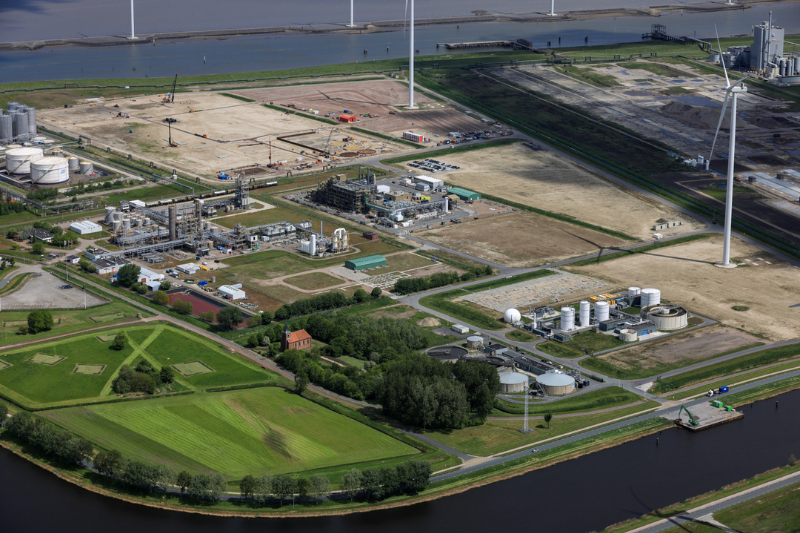
Circular chemistry technology firm BioBTX has announced plans to build a commercial-scale plant to convert mixed plastic waste into high-quality aromatic chemicals, cutting BTX production emissions by up to 80% compared with traditional fossil fuel-based methods.
It will be based in Chemical Park Delfzijl on the northern Coast of the Netherlands.
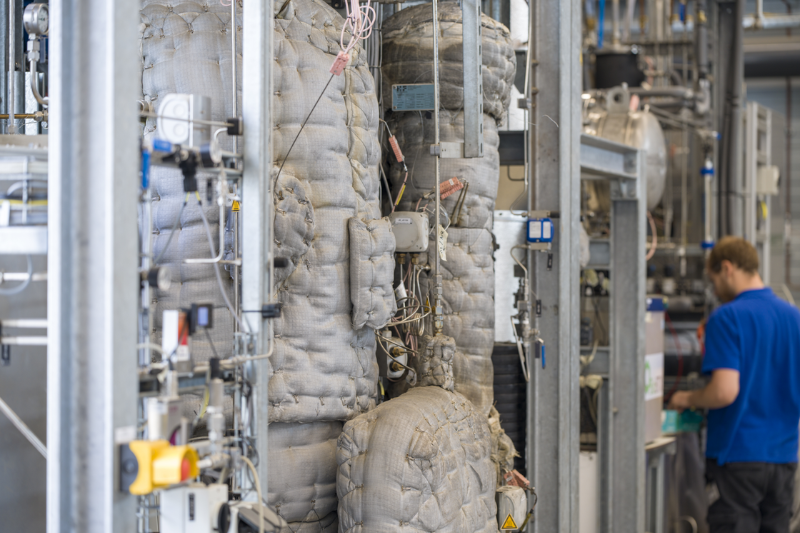
The Dutch company will use its ICCP (Integrated Catalytic Cracking Process) technology — which uses a catalytic pyrolysis process — to transform mixed plastic waste that would otherwise be incinerated or sent to landfill into aromatic oil consisting of benzene, toluene and xylenes (BTX).
The new plant is expected to create 35 new jobs and process around 20,000 tonnes of waste per year.
 BTX are the same building blocks the chemical industry uses today in coatings, pharmaceuticals and performance materials.
They can also be used for isocyanate production (MDI/TDI) at Covestro, from which soft foam for e.g. mattresses or rigid foam for insulating refrigerators are made.
Covestro has been a shareholder and strategic partner of BioBTX since 2024, with a mid-single-digit million Euro stake as announced.
"We've followed BioBTX's progress for years and are very happy to now see the point where the technology proves itself at industrial scale," says Dr Thorsten Dreier, Chief Technology Officer at Covestro.
This marks a very important step. Moreover, it processes mixed plastic waste instead of a single sorted stream, which is exactly the kind of recycling we need more of at scale to make a circular economy become reality.
BiotBTX said it expects the plant to recycle about 20,000 tonnes of waste and produce around 10,000 tonnes of renewable aromatic oil and 8000 tonnes of sustainable by-products annually.
Compared to conventional, fossil-based BTX production, the process is expected to cut greenhouse gas emissions of the resulting chemical building blocks by 70 to 80%.
"Reaching this key milestone in the development of BioBTX marks an important step in our journey towards our mission of making circular chemistry possible," added Ton Vries, co-founder and CEO of BioBTX.
I am very proud of the full BioBTX team and shareholders whose dedication and commitment have made this achievement possible. We are going to build our world’s first fully sustainable aromatic plant.
BioBTX said the announcement of the new plant "concludes a 14-year journey from an idea in 2012 through lab- and pilot-scale to commercial execution."
While this plant will focus on mixed plastic waste, its ICCP technology is feedstock-flexible and could expand to other sources in the future, such as biomass.


