
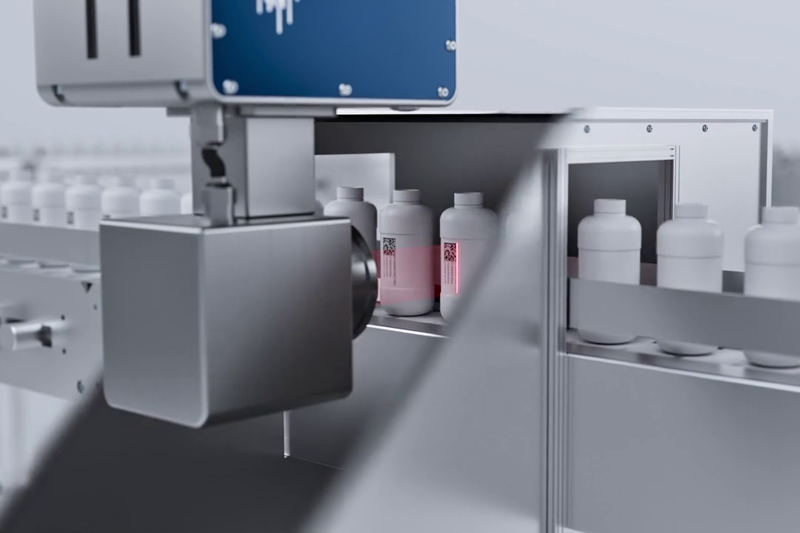
Two of the coding and marking industry's leading names have used Interpack 2026 in Düsseldorf as the launchpad for significant new product releases.
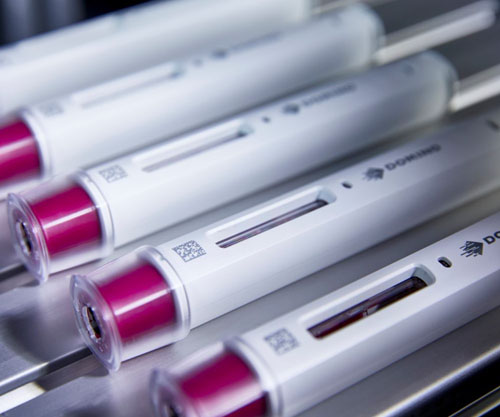
Domino's new Ux360i UV laser coder is perhaps the most immediately relevant to pharma teams.
Designed for high-speed lines handling sensitive or recyclable packaging materials, the system uses a photochemical process that interacts only with the uppermost layer of the substrate, leaving barrier layers and packaging integrity intact.
This makes it particularly suited to the thin films and mono-plastics increasingly favoured as the industry moves towards more sustainable packaging formats.
Critically for pharmaceutical manufacturers, the Ux360i has been built with regulatory compliance front of mind.
The system supports EU GMP Annex 11 and FDA 21 CFR Part 11 requirements, and Domino's GAMP 5-trained validation team is available to support customers through qualification processes.
As a GS1 Solutions Partner, Domino also helps manufacturers implement compliant 2D coding strategies — an increasingly important capability as serialisation and traceability mandates tighten globally.
The system delivers QR code marking up to 80% faster than Domino's previous UV generation, while integrating with ERP and MES systems via Domino Automation software.
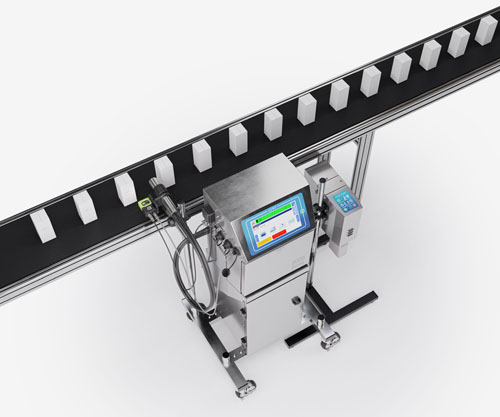
Linx Printing Technologies, meanwhile, has launched the 9000 Series Continuous Ink Jet (CIJ) range, positioning it squarely at the operational realities facing production managers across regulated industries.
The range's headline feature is its Linx PrintProtect battery backup, included as standard, which provides up to 3 minutes of continued printing during power interruptions — a practical safeguard in facilities where unplanned outages or shift-end power-downs can compromise batch integrity.
The 9000 Series also introduces REST API connectivity as standard, making it the first CIJ printer to communicate natively with external systems without intermediate software — a meaningful step forward for integration into complex manufacturing IT environments.
An optional Linx Iris vision system adds automatic code inspection for presence, readability and positioning, reducing the risk of miscoded product reaching the supply chain.
Together, the two launches reflect a broader industry direction: coding and marking systems are increasingly expected to function not as standalone peripherals, but as integrated, compliant and largely self-managing components of the modern pharmaceutical production line.


