

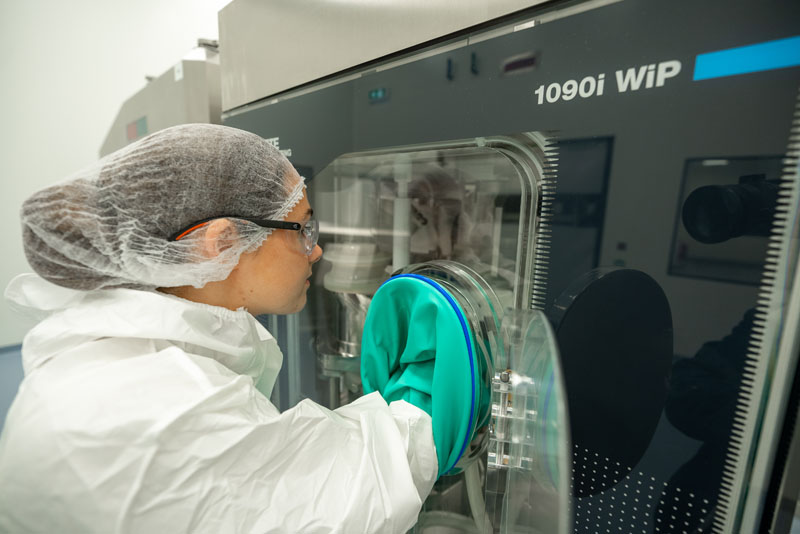
For many programmes, success depends not only on individual scientific capabilities, but on how effectively those capabilities are connected.
Drug substance development, formulation, analytical science, manufacturing, packaging and clinical supply are often treated as separate workstreams.
However, decisions made in one area can have a direct impact on the next.
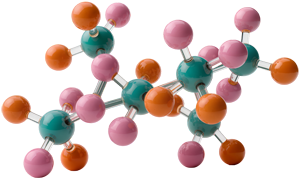
As molecules progress from early development towards clinical and commercial manufacture, a more integrated approach can help to reduce risk, improve technical understanding and create a clearer pathway from active pharmaceutical ingredient (API) to finished product.
Building resilience from the RSM stage
A robust development strategy begins well before the final API.
Reliable access to regulatory starting materials (RSMs), advanced intermediates and scalable synthetic routes can significantly influence programme resilience, cost, quality and speed.
When RSMs, intermediates and APIs are developed with downstream requirements in mind, teams can gain earlier visibility of critical quality attributes.
This can help to reduce reliance on fragmented supply chains, improve process understanding and support a more controlled route to production.
For complex or fast-moving programmes, this early alignment is particularly important.
It allows potential issues with impurity profiles, process robustness, scalability or material attributes to be identified and addressed before they become more difficult and costly to resolve.
Connecting drug substance and drug product development
Even when managed separately, drug substance and drug product activities are closely linked.
API characteristics such as particle size, polymorphic form, solubility, stability, impurity profile and manufacturability can all affect formulation performance and the final dosage form.
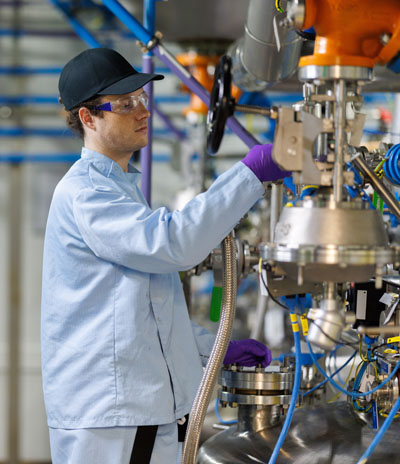
By considering the downstream implications of upstream decisions, development teams can make more informed choices earlier.
This is especially valuable for molecules with poor solubility, stability concerns or challenging physical properties … or when drug substance attributes may impact bioavailability, manufacturability and patient usability.
An integrated model does not remove the need for expertise. Instead, it ensures that specialist teams work from a shared understanding of the molecule, the process and the intended product profile.
This can improve communication, reduce handover risk and support better decision-making throughout development.
Addressing bioavailability and manufacturability challenges
Bioavailability remains one of the most common barriers in pharmaceutical development.
Many promising compounds face challenges related to solubility, permeability, stability or formulation performance.
If these issues are not addressed early, they can lead to delays, reformulation, increased costs and additional clinical risk.
A connected drug substance and drug product strategy allows teams to evaluate material attributes and formulation options in parallel.
This can support the earlier identification of potential risks and enable the more efficient assessment of technical options.
For example, understanding how API properties influence the finished product can inform particle engineering, solid-state form, formulation strategy, analytical method and manufacturing process design decision-making.
This type of joined-up thinking can help to ensure that development choices are not made in isolation but are aligned with the requirements of the final product.
The role of analytical science in integrated CMC development
Analytical science plays a central role in successful integration. It provides the data needed to understand the molecule, control the process, demonstrate quality and support regulatory progression.
A joined-up analytical strategy across drug substance and drug product development can help to avoid duplication, reduce method transfer challenges and ensure that data generated at each stage support the next.
This may include method development and validation, stability testing, impurity identification, solid-state characterisation and release testing. For complex molecules or products requiring specialised analytical techniques, this continuity can be particularly valuable.
It helps to build a clearer picture of product performance, process control and long-term developability while supporting a stronger and more cohesive regulatory narrative.
Reducing risk throughout the product lifecycle
Once a suitable API route and control strategy have been established, the next challenge is to translate that material into a finished product that can be manufactured, packaged, supplied and administered effectively.
This means considering the practical questions early in development.
- Is the API suitable for the intended formulation?
- Are there stability or compatibility concerns?
- Do particle attributes need tighter control?
- Are analytical methods appropriate for both API and finished product release?
- Can development batches be aligned with clinical supply timelines?
Addressing these questions across disciplines can help to reduce uncertainty and improve programme efficiency.
It also supports smoother transitions between development stages, from API manufacture through to formulation, clinical trial material production, packaging and supply.
Turning scientific understanding into manufacturing success
As development programmes become more complex, the ability to translate scientific understanding into practical manufacturing outcomes is increasingly important.
Complex molecules often require more than standard development pathways. They require technical judgement, cross-functional collaboration and the ability to bring the right expertise together at the right time.
In this context, integration is not about adding complexity. It is about reducing it.
By aligning chemistry, formulation, analytical and manufacturing activities, organisations can create a more co-ordinated development strategy that supports speed, quality and long-term product success.
Almac’s combined drug substance and drug product expertise supports this type of connected approach, bringing together capabilities across RSMs, intermediates, APIs, formulation, analytical testing, manufacturing, packaging and clinical supply.
From molecule to medicine
Bringing a new medicine to patients requires more than technical capability. It requires foresight, co-ordination and a practical understanding of how early development decisions shape later outcomes.

As timelines tighten and molecules become more challenging, integrated development strategies can offer a clearer and more efficient route from molecule to medicine.
By connecting drug substance and drug product expertise from the outset, organisations can improve technical alignment, reduce development risk and maintain momentum through clinical and commercial progression.
At Almac, we are serious about difficult science. Complex molecules, demanding development programmes and challenging manufacturing requirements require more than standard solutions.
They require scientific depth, practical experience and the ability to integrate expertise throughout the entire development pathway.
With our combined drug substance and drug product capabilities, we help clients to navigate complexity, accelerate decision-making and progress programmes with confidence.
For organisations seeking a partner that’s capable of transforming scientific challenges into patient‑ready medicines, Almac offers a connected, end-to-end solution and a proven partner of choice from molecule to medicine.


