

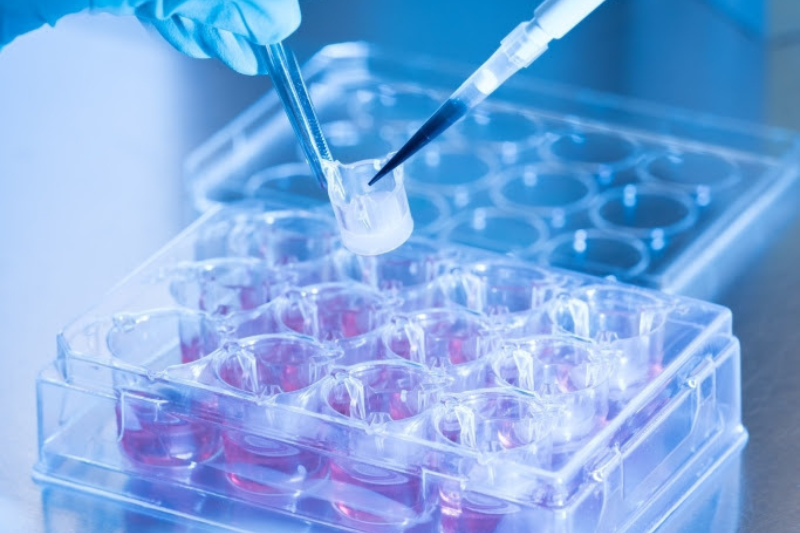
The skin microbiology specialist LabSkin has announced a new partnership with Aston University to develop more realistic laboratory-grown human skin that includes immune cells.
LabSkin's complex skin models help academic researchers and companies study how products and treatments interact with skin before trialling them in people.
The models come in thumbnail-sized sections around 1 cm thick and, according to the company, accurately reproduce the skin’s physical layers.
However, they do not currently include immune cells, which play a crucial role in inflammation and wound healing.
Under the new Knowledge Transfer Partnership (KTP) — funded by Innovate UK — researchers from Aston’s Department of Biosciences will work alongside Labskin to introduce macrophages into already existing skin models.
The pair hope that this will make the models more representative of real human skin and more useful for studying conditions such as chronic wounds and inflammatory skin disorders.
The improved skin models will facilitate a variety of early-stage research, including investigations into skin irritation, inflammation and healing.
By providing more relevant information about human skin responses to treatments earlier in the development process, the duo said the project could also reduce animal use in research and lower risks in later-stage clinical trials for new drugs and therapies.
Professor Andrew Devitt, Professor of Inflammatory Cell Biology in Aston University’s Department of Biosciences and Executive Dean of the School of Medicine, Pharmacy and Biosciences, is leading the academic side of the project.
He said: “Our research focuses on understanding how inflammation happens and is resolved — particularly in the context of chronic wounds, which are devastating for the individual and create a huge financial burden for the NHS."
Working with Labskin, we can apply our research knowledge in a highly practical way and help develop models that are far closer to what happens in real human skin.
Labskin’s Scientific Director, Dr Nicola Kingswell, added: "We’re really excited to get started with this project."
Adding immune cells to our skin models will allow us to look at how the skin responds to products and treatments in much more detail.
"The KTP is a great example of how private companies can work together with universities to make a real impact."


