
Promega Corporation is launching a new live-cell target engagement platform that could close a long-standing gap between biochemical and cellular assays for understudied or difficult-to-interrogate proteins. The TarSeer™ BRETSA™ Target Engagement System is a novel bioluminescence resonance energy transfer-based shift assay for detecting ligand-protein interactions in intact cells using protein denaturation. It gives drug discovery researchers early, target-specific cellular insights by validating weak or early chemical matter and expanding the targets accessible in live-cell drug discovery workflows. The technology will be debuted at the Society for Laboratory Automation and Screening (SLAS) International Conference and Exhibition in Boston, 7 to 11 February 2026.
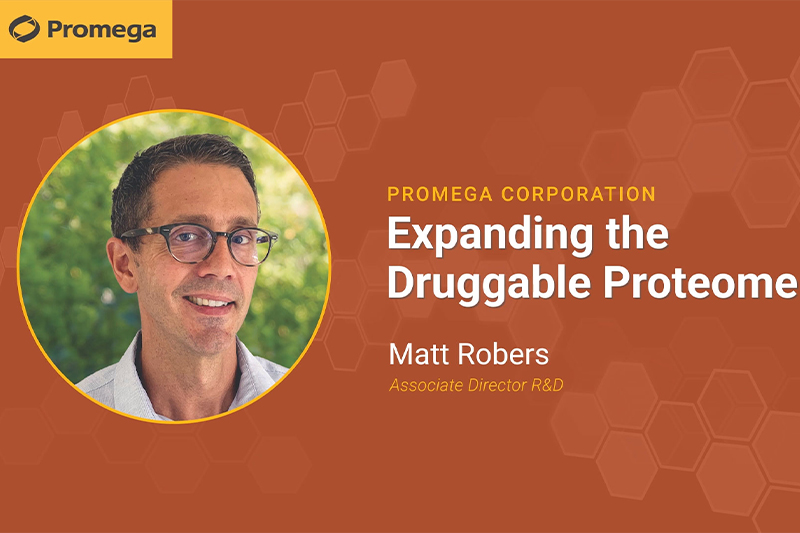
“You can now potentially study intracellular target engagement for any protein in live cells,” says Matt Robers, Associate Director of R&D at Promega. “This platform will give drug discovery researchers new starting points to go after a huge fraction of previously intractable therapeutic targets within the human proteome.”
Drug discovery teams can identify biochemical hits that fail to translate in cellular settings. A lack of target-specific cellular assays, especially for difficult or intractable targets, stalls hit validation and lead optimisation. BRETSA is designed to help overcome this challenge by measuring compound binding to target proteins directly in cells via changes in target protein thermal stability, even when targets lack known chemical probes or binding pockets are poorly defined. This early cellular characterisation of target-ligand potency reduces uncertainty and increases early-stage confidence in compound prioritisation.
Advantages of the TarSeer™ BRETSA™ Target Engagement System include:
-
Enhanced sensitivity: Researchers can measure potency and rank-order compound binding in live cells, including weak interactions that are difficult to quantitate or are even missed in early discovery.
-
Broad applicability: The platform has been applied to more than 20 target classes and multiple cellular compartments, supporting studies of proteins that lack established cellular assays.
-
Flexible, scalable workflow: An addition-only workflow compatible with 96- and 384-well formats allows teams to scale from focused follow-up to higher-throughput experiments.
Matt Robers will introduce the platform and present data across multiple target classes during a podium presentation titled “BRETSA: An ultra-sensitive, broadly-applicable BRET method to measure target engagement through protein denaturation in live cells” at SLAS 2026. The talk will take place at 3:30 pm on Tuesday, February 10, 2026. Promega staff will be available throughout the conference in Booth #1448 to discuss the technology.
The TarSeer™ BRETSA™ Target Engagement System builds on the long success of the Promega NanoBRET® Target Engagement System, which also uses BRET to quantify cellular target engagement. The BRETSA platform complements NanoBRET methods by addressing targets that lack suitable probes for NanoBRET analysis. By expanding this toolbox, Promega deepens its support for researchers developing small molecule drugs against a wide range of disease-relevant proteins.


