
Promega UK has launched the Lumit Cell Proliferation Assay (Human Ki-67), a homogeneous, wash-free cell-based assay for the detection of hKi-67 - a well-established, metabolism-independent marker of proliferative activity.
A simple add-and-read, plate-based format, the assay enables researchers to track hKi-67 without the complicated washing steps associated with conventional methods. Validated in both 96- and 384-well microplate formats, it offers excellent linearity and a robust response, allowing researchers to generate more data with greater confidence, with less preparation time and faster time to results. The assay is also compatible with 3D culture methods, extending its utility across a broad range of experimental workflows.
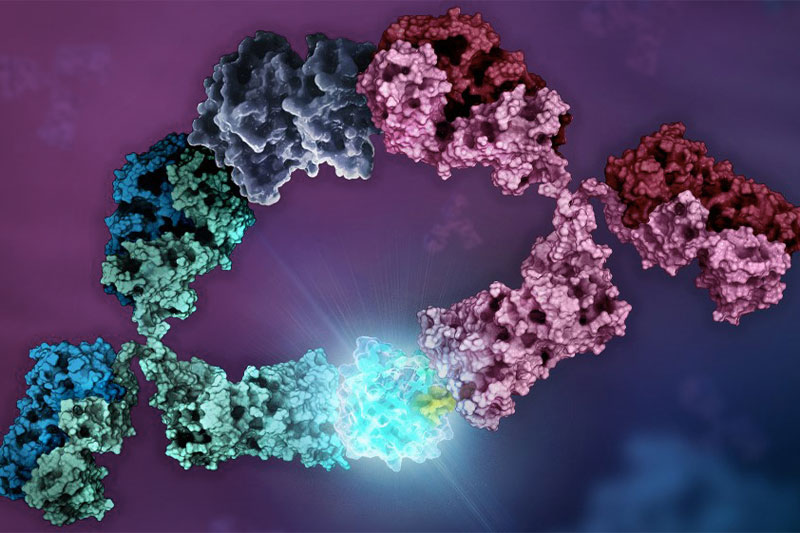
The assay uses Lumit technology, which relies on labelled primary antibodies that, in the presence of hKi-67, form a fully functional NanoBiT luciferase enzyme. The addition of substrate produces a luminescent signal proportional to Ki-67 levels, eliminating the need for fixation, dissociation, or wash steps.
Philip Hargreaves, Director of Strategic Marketing and Business Development, Promega UK, commented: “Cell proliferation is a fundamental parameter assessed across a wide range of cell-based research workflows, from oncology drug screening and kinase inhibitor biology to targeted protein degradation, immunology and cell therapy applications. It is equally central to antibody-drug conjugate screening, mechanism-of-action and pathway studies, yet current methods are laborious and time-consuming, typically requiring treatment windows of 72 to 96 hours and multiple handling steps that introduce variability.
Our new Lumit Cell Proliferation Assay addresses this directly – tracking hKi-67 in a simple add-and-read format that delivers results faster and with greater confidence. It is a meaningful addition to our portfolio of cell health solutions, designed to give researchers more time to focus on the science that matters.”
Zeynep Kaya, PhD, Postdoctoral Research Fellow, Prof Andrew Beggs Group, University of Birmingham added: “Compared with conventional fixation-based Ki-67 flow cytometry, the assay is significantly simpler and faster, requiring no dissociation or wash steps while still producing robust and reproducible results.”
The Lumit Cell Proliferation Assay joins Promega’s extensive range of cell health solutions. The portfolio includes trusted products such as CellTiter-Glo Luminescent Cell Viability Assay and RealTime-Glo MT Cell Viability Assay for real-time, non-lytic viability monitoring, alongside the Caspase-Glo 3/7 Assay for apoptosis detection. Together, these tools provide assays that determine specific mechanisms of cell death – including apoptosis and necrosis – as well as biochemical and cell-based assays for measuring inflammation, cytochrome P450 activity, oxidative stress, and autophagy, giving researchers a single trusted source for their cell health workflows.
The Lumit Cell Proliferation Assay (Human Ki-67) is available now from Promega UK.
For further information, visit https://www.promega.co.uk/products/cell-health-assays/cell-viability-and-cytotoxicity-assays/lumit-hki-67-immunoassay-for-cell-proliferation/?tabset0=0 or contact your local Promega representative.


