
A container may appear as a single line in a purchasing specification, but in chemical and pharmaceutical operations its role extends much further. It forms part of a broader process that includes filling, storage, transfer, transport, emptying and, where appropriate, cleaning and reuse.
This becomes particularly important when sensitive substances are involved. Material compatibility, sealing systems, surface finish, connections and regulatory requirements can all influence how well a container performs within a specific application. Selecting the right solution therefore starts with understanding not only the substance, but also the process around it.
Expertise far beyond the product
For this reason, THIELMANN approaches container development as a technical partnership. Its technical teams work with customers to translate operational requirements into practical specifications, from material and seal selection to fittings, surface finishes, customised designs and certifications.
The objective is to ensure that the container fits the application, rather than asking the application to fit a standard product. This means considering how it will be filled, handled, emptied and integrated into existing equipment, as well as the requirements that may emerge over its working life.
One portfolio, different roles
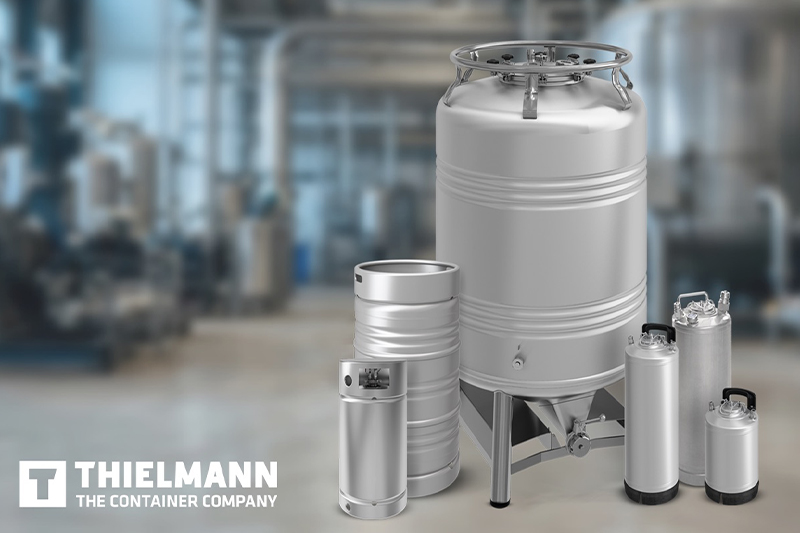
That approach is supported by a broad stainless steel portfolio covering capacities from 2.5 to 1,250 litres. The range includes pressure vessels, hazardous storage drums, pharma aseptic vessels and aseptic intermediate bulk containers (IBCs).
These products address different operational needs. Pressure vessels support applications involving controlled pressure conditions, while aseptic vessels and IBCs respond to pharmaceutical environments where hygienic handling and cleanability are key considerations. Hazardous-goods containers address the additional demands associated with regulated substances.
Specialist formats for applications such as electrolytes, ionic exchange and demanding chemical environments further demonstrate why containment cannot be treated as a one-size-fits-all decision.
Extending the conversation with new drums
THIELMANN’s expanded stainless steel drum portfolio adds two further options, available in 100–230 litre formats.
The Tight-Head Drum for Chemical Substances with Tri-Sure® Connections is designed for compatible liquid chemicals, solvents and process fluids. Its closed construction and standardised fittings support integration with established filling and discharge systems.
The Open-Head Drum for Residues addresses another stage of the process. Its full opening facilitates the handling of solid residues or inner containers, while alternative configurations are available for liquid residues.
One partner across the entire lifecycle
A lifecycle approach does not mean using one container for every task. It means considering each container as part of a wider operation and having access to technical expertise as requirements evolve.
Processes change, new substances are introduced and equipment is modified. In this context, the value of a long-term container partner lies not only in supplying the initial vessel, but in understanding how that vessel needs to perform within the customer’s operation over time.
For manufacturers handling sensitive chemical and pharmaceutical substances, the container is the tangible product. The partnership around it is what connects design, process requirements and long-term performance.
Join THIELMANN at CPHI Milan, 6–8 October 2026, Hall 9, Stand 9J51.


