
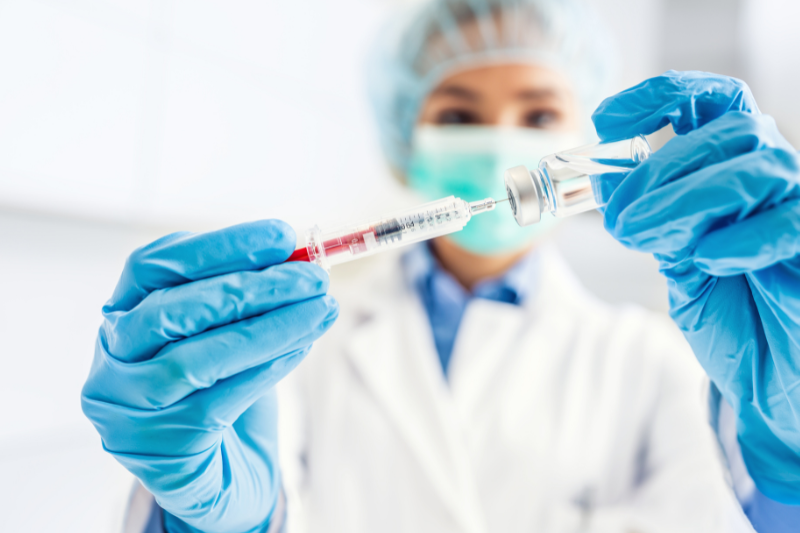
Touchlight has announced that its cell-free DNA manufacturing technology has been used to produce a personalised cancer vaccine administered to the first UK patient in the NEOVACC Phase I clinical trial for advanced non-small cell lung cancer (NSCLC).
The patient, treated at The Clatterbridge Cancer Centre (CCC) in Liverpool, received a bespoke vaccine designed around genetic mutations identified in their tumour.
The vaccine is being investigated alongside standard immunotherapy in patients whose cancer has not fully responded to treatment.
The ten-patient trial, led by CCC and the University of Liverpool, aims primarily to assess safety and determine whether the personalised DNA vaccine can generate an immune response against tumour-specific targets.
Manufacturing personalised cancer vaccines
For the pharma manufacturing sector, the study highlights one of the key challenges facing personalised cancer vaccines: producing a unique therapeutic for individual patients within clinically useful timescales.
Personalised neoantigen vaccines are designed using genetic information from an individual’s tumour to identify mutations that can be targeted by the immune system.
This creates a fundamentally different manufacturing model from conventional vaccines, where large batches of an identical product can be manufactured and stored.
Touchlight said in its release that its doggybone DNA (dbDNA) platform is intended to address some of these constraints.
Rather than relying on bacterial fermentation traditionally used to manufacture plasmid DNA, dbDNA is produced through a cell-free, enzymatic process.
Touchlight added that its platform can produce multi-gram quantities of GMP DNA in weeks rather than months, while eliminating bacterial sequences, antibiotic-resistance genes and endotoxins associated with conventional plasmid production.
The company’s technology uses enzymatic amplification to generate long DNA molecules before converting them into its covalently closed linear dbDNA vector.
The cell-free process is designed to offer a smaller manufacturing footprint and more rapid scale-up than fermentation-based DNA production.
The technology could therefore be particularly relevant to personalised therapies, where manufacturing timelines can become a bottleneck between identifying a patient’s tumour mutations and delivering the corresponding treatment.
From sequencing to treatment
NEOVACC builds on an increasingly sophisticated workflow in personalised cancer treatment: tumour tissue is sequenced to identify cancer-specific genetic changes, candidate neoantigens are selected and those targets are incorporated into an individualised vaccine.
The UK trial is one of a growing number of efforts to translate personalised cancer vaccines into clinical practice.
The approach is being investigated across several vaccine platforms, including mRNA and DNA, with manufacturing speed, cost and scalability remaining important considerations as developers move beyond small early-stage studies.
The Health Research Authority describes the NEOVACC vaccine as being generated from each participant’s own genetic information, with patients receiving the vaccine alongside pembrolizumab.
Participants are scheduled to receive repeated vaccine doses during the course of the study, with tumour biopsies and blood samples used to assess whether the treatment is generating the intended immune response.
Touchlight and the University of Liverpool first announced their collaboration on the programme in 2024, positioning dbDNA as a potential method of shortening the manufacturing timeline for individualised cancer vaccines.
With the first patient now dosed, the NEOVACC study will provide an early clinical test of whether a cell-free DNA manufacturing approach can support the practical delivery of personalised cancer vaccines — and whether the model could eventually be extended to other solid tumours.


