
The Structural Genomics Consortium (SGC) has announced US$48.9m (£31.3m) in new funding, which will allow it to develop its open access research programme to support drug discovery and the development of new medicines.
In addition, two new commercial partners, Eli Lilly and Pfizer, have joined the SGC.
Formed in 2004, the SGC is supported by public- and private-sector funding and all of its findings are made available to the global research community without restriction.
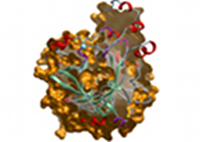
Since its inception, the SGC has contributed more than 1,300 high-quality three-dimensional protein structures to the public domain.
This structural information could help to improve human health by providing research reagents and protocols, and robust frameworks for structure-guided discovery of new medicines for cancer and diabetes, among other diseases, the SGC says.
Eli Lilly and Pfizer have joined the Canadian Institutes for Health Research, GlaxoSmithKline, the Novartis Research Foundation, the Ontario Ministry of Research and Innovation and the Wellcome Trust as members of the SGC. Together, these organisations have committed nearly US$50m (£32m) to the consortium to sustain another four years of operation.
Eli Lilly, Pfizer, Novartis and GSK will provide more than $9m (around £6m) worth of in-kind contributions, primarily medicinal chemistry resources, for collaborative discovery of chemical tool compounds that target disease-linked proteins.
The SGC will continue to operate from its laboratories at the University of Oxford in the UK and the University of Toronto in Canada, as well as benefiting from a network of expert scientific collaborators worldwide.
The SGC scientific programme for 2011–15 continues with a strong protein structure determination effort, while broadening its reach with two new programmes on antibodies and chemical tools.
These will focus on epigenetic phenomena, the heritable changes in gene function that occur without changes in the underlying DNA sequence. Alterations in these processes are linked to many common diseases, and there is broad agreement that a better understanding of epigenetics may eventually yield new approaches to diagnosing and treating a number of important diseases.
SGC provides funding of US$49m to support drug discovery
Eli Lilly and Pfizer join the Structural Genomics Consortium
You may also like

Trending Articles
-
You need to be a subscriber to read this article.
Click here to find out more.


